


EMBRACING TOMORROW. Amid the remnants of last year’s economic woes, SIHH opened their doors to new exhibitors and unveiled a host of exciting surprises for the future of watchmaking
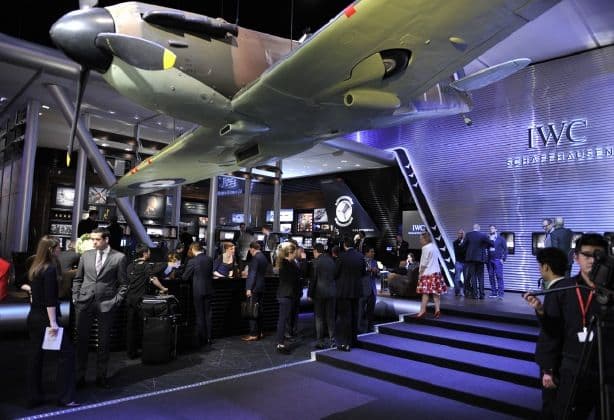
IWC Schaffhausen’s aviation-themed exhibit
This has been a pretty good year for watches. In retrospect, it could have been worse, as the world of haute horlogerie is still reeling after the currency swing of early 2015. Still, while it’s safe to say that with the economic realities of today everybody in the business is looking over their shoulders, things are looking up. And perhaps there’s a silver lining to all this doom and gloom, as more and more industry leaders are looking at partnerships and collaborations in a new light.
Nowhere was this change in attitude more palpable than at the annual Salon International de la Haute Horlogerie (SIHH). If the stronger Swiss franc (and a host of other problems) had watchmakers holding back on major announcements early last year, the 2016 edition of the second biggest (and, some might argue, first in terms of exclusivity) trade show in the world of watchmaking pulled out all the stops for their grandest showing yet.
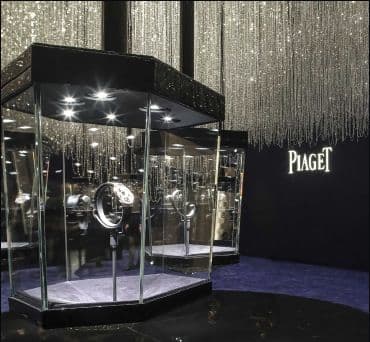
Piaget‘s booth
New Players
Hall six of the Palexpo Exhibition Center in Geneva was decidedly brighter this year, and even came with a touch of whimsy with the 24 Hours in the Life of a Cuckoo exhibit. But the biggest facelift in this year’s SIHH was the addition of a brand new area, dubbed the Carré des Horlogers, which housed booths from some of the world’s most celebrated independent watchmakers. There were nine additional watchmakers, to be precise, including Christophe Claret, De Bethune, H. Moser & Cie, Hautlence, HYT, Kari Voutilainen, Laurent Ferrier, MB&F and Urwerk—bringing the total number of participating brands to 24.
From the ranks of major maisons that made up the bulk of SIHH, Ralph Lauren Watches has left the show, leaving A. Lange & Söhne, Audemars Piguet, Baume & Mercier, Cartier, Greubel Forsey, IWC, Jaeger-LeCoultre, Montblanc, Panerai, Parmigiani Fleurier, Piaget, Richard Mille, Roger Dubuis, Van Cleef & Arpels and Vacheron Constantin. Keen-eyed observers familiar with the Swiss watch industry might notice how this list already contains a number of brands that are not part of Richemont, which essentially runs SIHH. In a way, perhaps this new, more inclusive approach is simply a natural evolutionary development for the trade show. Besides, it’s no big secret that some of those smaller brands have already been openly exhibiting around Geneva during previous SIHH shows. So, rather than oppose these outsiders playing in the outliers of their show, the organizers of SIHH decided to simply embrace them.
March of the Old Guard
While the unprecedented inclusion of independent watchmakers would forever be one of the major highlights of SIHH 2016, the “old guard” of the fair put up quite a showing of exquisite timepieces that essentially defined “luxury.”
Take, for example, A. Lange & Söhne and their Datograph Perpetual Tourbillon. Underlying their subtle approach to luxury, the tourbillon on this timepiece is only visible through the case-back—which is rather uncommon in modern watches equipped with this particular complication. Then again, “hidden” tourbillons aren’t exactly new for A. Lange & Söhne. Furthermore, the Datograph in the watch’s name refers to a unique feature combining “date” and “chronograph” functions, while the Perpetual part refers to a whole group of mechanisms ranging from a date display to a moon phase indicator. The going price for this limited timepiece (only 100 are produced) sits at a breathtaking €295,000.
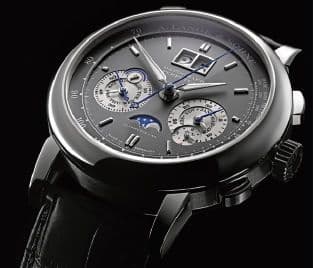
The A. Lange & Söhne Datograph Perpetual Tourbillon
That being said, it would seem that A. Lange & Söhne is also pushing their Saxonia Moon Phase model—which comes with a price tag only a hair over a tenth of the Datograph Perpetual Tourbillon. Indeed, many brands were visibly focusing more and more on their entry-level offerings. Another particularly notable example of this trend would be IWC’s Timezoner Chronograph, which is part of the brand’s overhauled line of pilot watches. Designed with the modern jetsetter in mind, it looks unmistakably IWC and houses a range of nifty complications. More importantly, at just below $12,000, the Timezoner Chronograph is a definite bargain.
Speaking of market trends, however, there were minor shifts in design and material preferences as well. For the latter, there’s the resurgence of classic yellow gold. It certainly begs the question: Why was yellow gold ever unpopular? Did too many people perhaps deem it a bit too ostentatious compared to the subtler shades of white and rose gold? In any case, yellow gold is back, and Audemars Piguet had the perfect piece to show why this hue should have never gone out of favor.
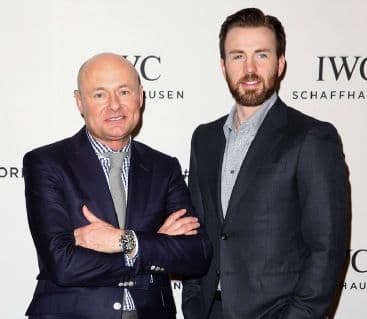
IWC Schaffhausen CEO Georges Kern and Chris Evans
The talking piece is, of course, the Audemars Piguet Royal Oak Chronograph 26320 Yellow Gold. While not a new design by any means, this updated Royal Oak model is wider than its predecessors at 41mm in diameter but also thinner at 10.8mm. So, it’s actually rather thin for a chronograph and feels balanced on the wrist. While it has many other features going for it, such as the signature Grande Tapisserie pattern on the dial, this Royal Oak will certainly be remembered foremost for its ingenious way of utilizing yellow gold. Its gilded appearance is quite vivid, yet it is almost completely coated with a brushed finish, thus giving it a matte look that is easy on the eye while belying a more classic sense of luxury.
Nothing, though, says “luxury” quite like a gold movement. As in, a watch with a movement made out of gold—which is both a technical marvel and an unbeatable feast for the discerning eye. That watch is the Parmigiani Fleurier Bugatti Super Sport Sapphire, part of a line of limited edition timepieces crafted by Parmigiani in a partnership with Bugatti that goes all the way back to 2004. While new additions to the line have been released following SIHH 2016 (namely the Parmigiani PF Bugatti 390 concept watch), the Bugatti Super Sport Sapphire sits in a league of its own.
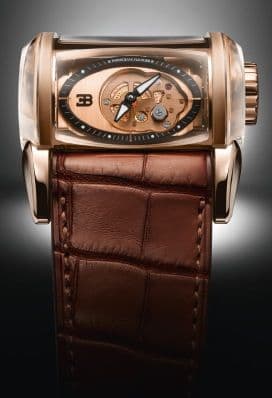
The Parmigiani Fleurier Bugatti Super Sport Sapphire
In essence, the Bugatti Super Sport Sapphire is a skeletonized structure, reminiscent of an engine block, to which sapphire segments have been added. This gives a clear view of the movement inside, which comes with bridges, plates and more than a dozen other components made of red gold. It’s worth noting just how difficult it is to create a mechanism like this (or any mechanical contraption, for that matter) using gold, which has a tendency to stick to tools and react unpredictably to machining processes. The end result is a peerless timekeeping masterpiece—one that costs about twice the price of the aforementioned Datograph Perpetual Tourbillon. If anything, the Bugatti Super Sport Sapphire is absolute proof that luxury is not dead.
Big Surprises in Small Packages
It can be argued that the watches covered so far are representative of the overall tone of SIHH 2016. But, as always, behind the bigger picture of any momentous event stands many smaller pictures that are no less interesting.Cartier, for one, had one of the most beautiful and spellbinding little pictures.
The Rotonde De Cartier Astromystérieux brings us a reimagining of the tourbillon. Instead of having the escapement rotate every minute, the entire movement makes a full rotation across the dial every hour utilizing concepts taken from the brand’s famous mystery watches. While this might be stretching the definition of “tourbillon” a bit, it’s still an impressive (and delightful) feat of watchmaking.
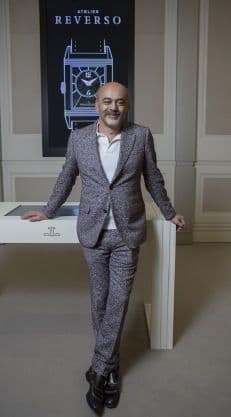
Christian Louboutin at Jaeger-LeCoultre’s booth
Then, there were the little surprises from the Carré des Horlogers. There’s Hautlence with the Vortex Primary which was co-designed by Eric Cantona and looks for all the world like a stained glass vitrine with its multi-colored sapphire panels over its unique chain-driven jumping hours; there’s the understated design of H. Mosier & Cie.’s Venturer Big Date, which belies the brand’s nifty interchangeable modular escapement; there’s alsoHYT’s H2 Tradition, which brings the brand’s hydromechanical horology into an elegantly wearable form; and many, many more.
Finally, there were the subtle surprises that underlie major shifts in the way the watchmaking industry goes about its business. Take the Piaget Emperador Coussin XL 700P, which utilizes spring drive technology from Seiko. Coming from a prominent member of Richemont, this is definitely a huge paradigm shift that will have major repercussions in the future. The same can be said with Panerai’s Lo Scienziato – Luminor 1950 Tourbillon GMT Titanio 47 mm, which features a case made using 3D printing. It should be noted, however, that Panerai used a technique called “direct metal laser sintering”—not something you can do using commercially available 3D printers. It would definitely be interesting to see how other watchmakers address, and perhaps adapt, 3D printing in the future.
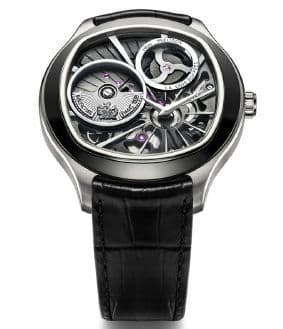
The Piaget Emperador Coussin XL 700P
Burdens of the Past
All in all, SIHH 2016 clearly indicates that the watchmaking industry is changing. On the one end, there were the changes forced upon the industry by today’s financial climate; on the other, there were advances in production technology, changes in manufacturing methods and design philosophies. Holding it all together in the center of it all are the traditional values of high-end watchmaking and the heritage of two dozens of prominent maisons. And that is what SIHH is all about.
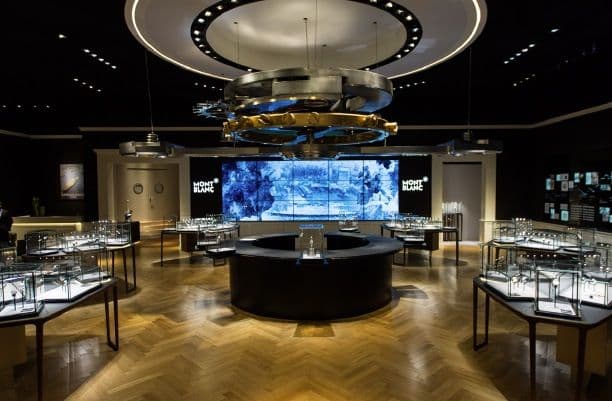
Mont Blanc’s booth at SIHH 2016