


PARIS EXUBERANCE. With more freedom, clearer visions and engaging narratives, the designers of Paris have composed rich collections that celebrate personal styles
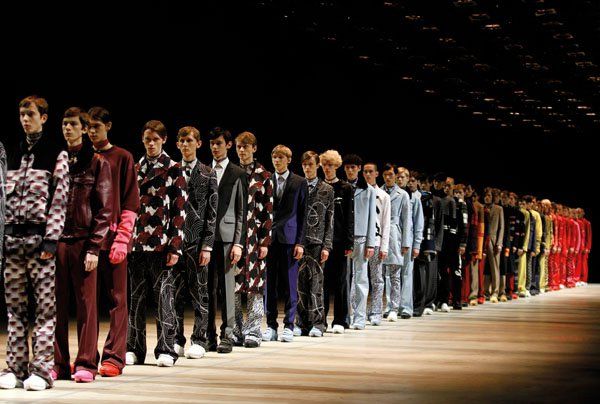
A scene from Kenzo’s Fall/Winter ’16/’17 show in Paris
Back then, the menswear industry thrived on men who ordered suits. Today, a significant part of the business is comprised of ready-to-wear clothes and dashing accessories. Despite the fact that tailoring—sometimes in playful, innovative forms—still define a large chunk of what designers have to offer, identity and attitude of the men actually wearing the clothes pretty much determine where menswear is going. At the moment, it is going forward at a steady rate as more brands depend on its menswear departments following slower profit growth in womenswear.
The exciting vibes of menswear were strongly felt back during the last week of January, when Paris Men’s Fashion Week was held. When the womenswear industry was shaken with a rush of resignations, the menswear field felt relatively calmer. Yes, Italo Zucchelli, Massimiliano Giornetti and Alessandro Sartori have closed their chapters in Calvin Klein, Salvatore Ferragamo and Berluti, respectively; but the giants of Paris—Kim Jones, Véronique Nichanian and Kris Van Assche, just to name a few—are still around with even more dynamic visions as well as boundary-pushing aesthetics.
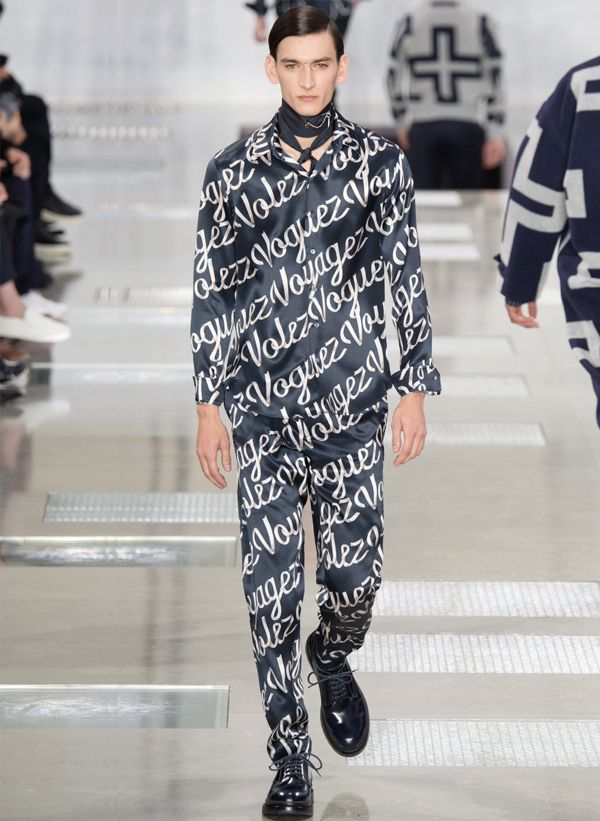
Louis Vuitton’s slogan, “Volez, Voguez, Voyagez,” emblazoned on the clothes
A stellar example would be Louis Vuitton. Taking a different approach than his usual exotic excursions, men’s creative director Kim Jones paid homage to the city he called home for the past five years. Although using Paris as a theme comes off as a tad repetitive, especially given how Louis Vuitton has taken its retrospective exhibition “Volez, Voguez, Voyagez” to several countries, Jones still executed his idea impeccably. The aforementioned phrase was beautifully printed on silk scarves and shirts, which undoubtedly will make an appearance in many editorials. But the highlights were mainly the workwear-inspired outerwear with large pockets and prominent use of the Monogram Eclipse on a bevy of bags. With Shinji Ohmaki’s “Liminal Air Space-Time” giving the show a sentimental touch, the collection felt fittingly personal. “Everything was deep. The color was deep,” said Xavier Dolan, Louis Vuitton’s brand ambassador and campaign star, after the show.
Going in the opposite direction was Kris Van Assche from Dior Homme. He took a break from reinterpreting the house’s heritage, and instead opted for a more casual outing. “Mr. Dior was not a starting point. He’s always there, but I wanted it to be much more about today,” he explained. Upon arriving, guests were greeted by skate ramps, a literal translation of Van Assche’s inspiration this season. The suits were no longer skinny but instead loose, completed with neck charms and bows. The trousers were especially roomy, and the overall mood was more relaxed than usual. The designer definitely upped his ante this time, keeping up with the aforementioned movement to ready-to-wear pieces that are beyond suits.
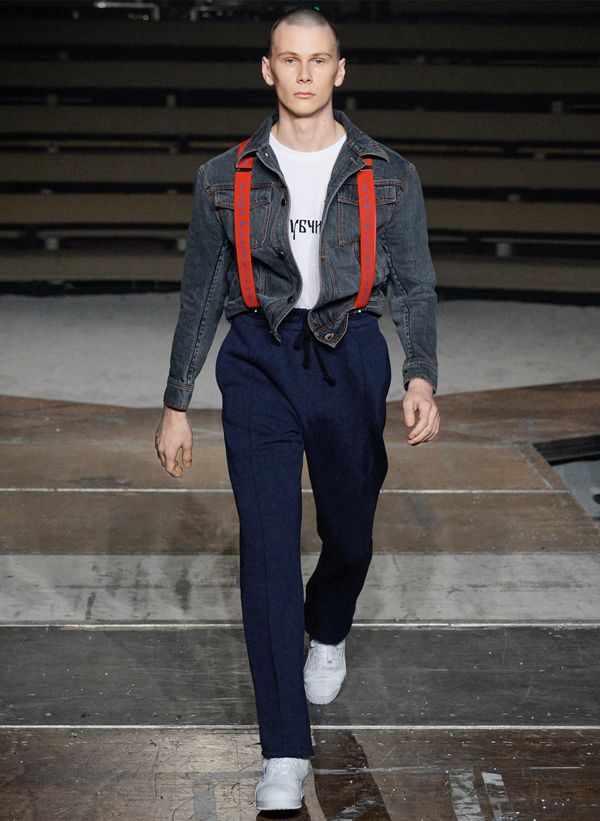
Goscha Rubchinskiy’s renewed ’90s punk style
If Dior Homme used “street” to make the brand look sleek, Gosha Rubchinskiy was a true street kid whose design harkened back to post-Soviet Russia. Rebellious, quirky and raw, Rubchinskiy’s singular aesthetic was soon setting a bar for others that followed. This season, he was influenced by the punks of the 1990s. And, boy, did his design feel like an original breath of fresh air in Paris. Oversized leather jackets, sweatshirts bearing the brand’s logo and baggy denim trousers might not sound all that appealing, but in the hands of the designer, they turned into the archetypal cool kid’s clothing essentials. Outside the show, you would be able to see many kids donning his apparels, looking strikingly bold in their Rubchinskiy’s getups.
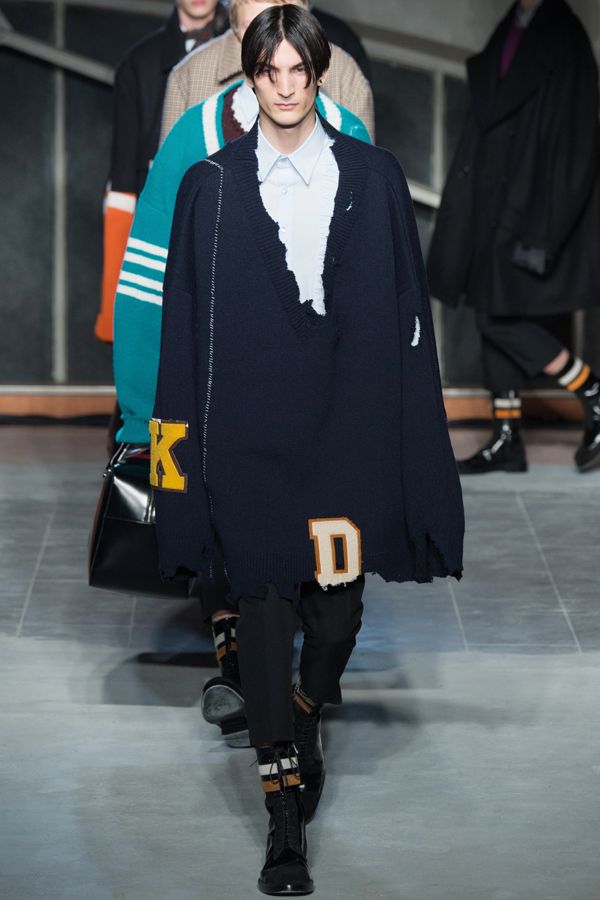
The runway finale of Raf Simons
Speaking of outside the show, Raf Simons’ scribbled pieces from last season were also spotted on the streets of Paris that January. This fall/winter, his collection was highly anticipated following his departure from Dior to focus on his own artistic pursuits and menswear line. Titled “Nightmares and Dreams,” the collection was presented in an almost theatrical way. Instead of the usual blasts of music, the soundtrack to the show incorporated a series of narratives composed by director David Lynch. The models then sauntered on the runway in oversized silhouettes, clad in pieces with frayed edges, as if they had been worn for quite some time. Both the soundtrack and the clothes successfully evoked memories and provoked bouts of nostalgia. This is, of course, exactly the kind of work that the Belgian designer is known for.
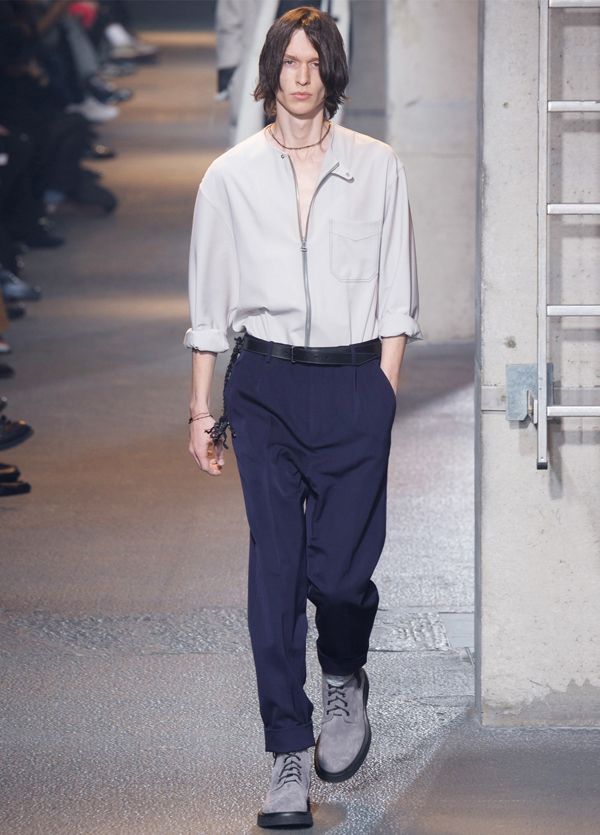
Lanvin’s sleek but “worn-in” look
Interestingly, Lucas Ossendrijver also put together a strongly sentimental collection for Lanvin. After his longtime collaborator, Alber Elbaz, left his position as creative director of the house’s womenswear line, Ossendrijver started questioning his motivation in designing. At the same time, Elbaz’ sudden departure fueled his creativity to present utterly wearable clothes on the runway. Soft-looking textures and gem colors highlighted his fall/winter offerings, along with a worn-in quality that was unmistakably Lanvin. Nonetheless, the lineup looked exuberant, as stitching details were balanced with exemplary knitwear in one harmonious, coherent collection.
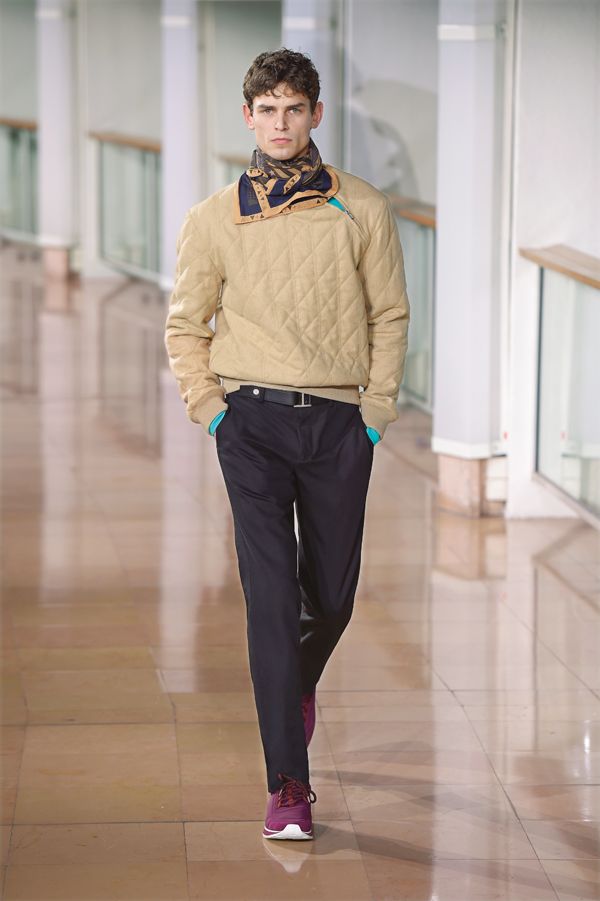
Men’s scarves are eminent on Hermès’ runway
Consistency, however, can sometimes be mistaken for monotony. The artistic director of Hermès Men, Véronique Nichanian, cleverly avoided the latter with her creations. It was particularly interesting to note how varied and playful her outing was for this season. Khakis, blues and pinks freshened up the collection, which was topped off with brilliantly styled silk scarves. The overall vibe, as always, was relaxed. At first glimpse, those pieces came across as being simple—perhaps a bit too simple. But, Nichanian has always been a master of discreet luxury, with a knack for making the wearer revel in her pieces even without noticeable logos. She employed cashmere, silk and even crocodile skin to orchestrate an understated string of clothes. The result hit all the right notes: Carefully curated yet playfully arresting.
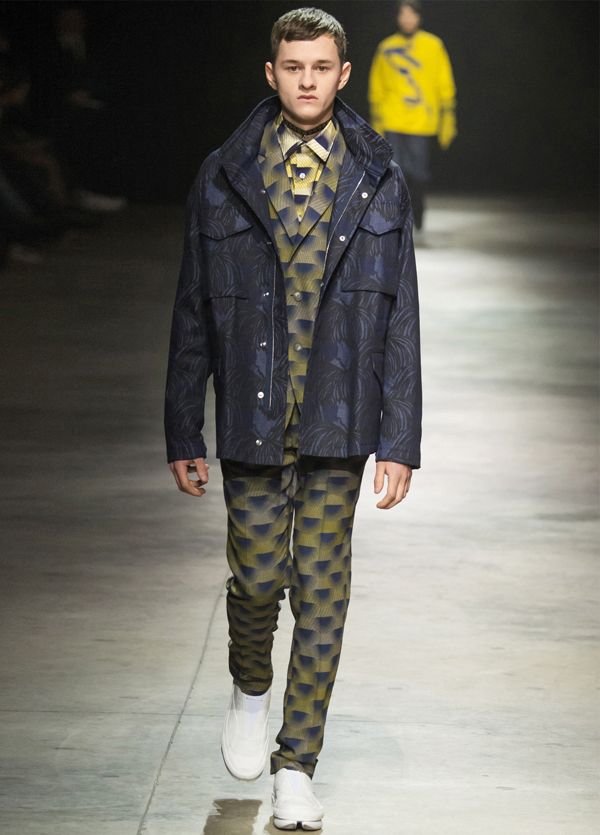
Kenzo’s fresh youthful appeal
Equally, if not more, arresting were Givenchy and Kenzo. Despite some notable differences, they shared the same youthful edge that is the epitome of menswear’s revival. On a pink stage, Riccardo Tisci introduced Givenchy’s new signature: the cobra. The majestic snake was translated into embroideries and prints for jackets as well as sweaters. Meanwhile, Kenzo’s Humberto Leon and Carol Lim looked back to their experience attending Blur’s concert in 1995. Whimsical, nostalgic and moody, the collection featured desaturated neon colors, logos and psychedelic patterns. But, it was more than a nod to the past. Components of newness are paramount for Leon and Lim, as it is for the future of menswear. The excitement has just begun.
This article first appeared in DA MAN Style Fall/Winter 2016. Get your copy here.