


Dominic Di Tommaso and Noa Diorgina lead a high-altitude capture-the-flag race that also puts Southeast Asia’s parkour community, and the discipline’s wider value, in focus.
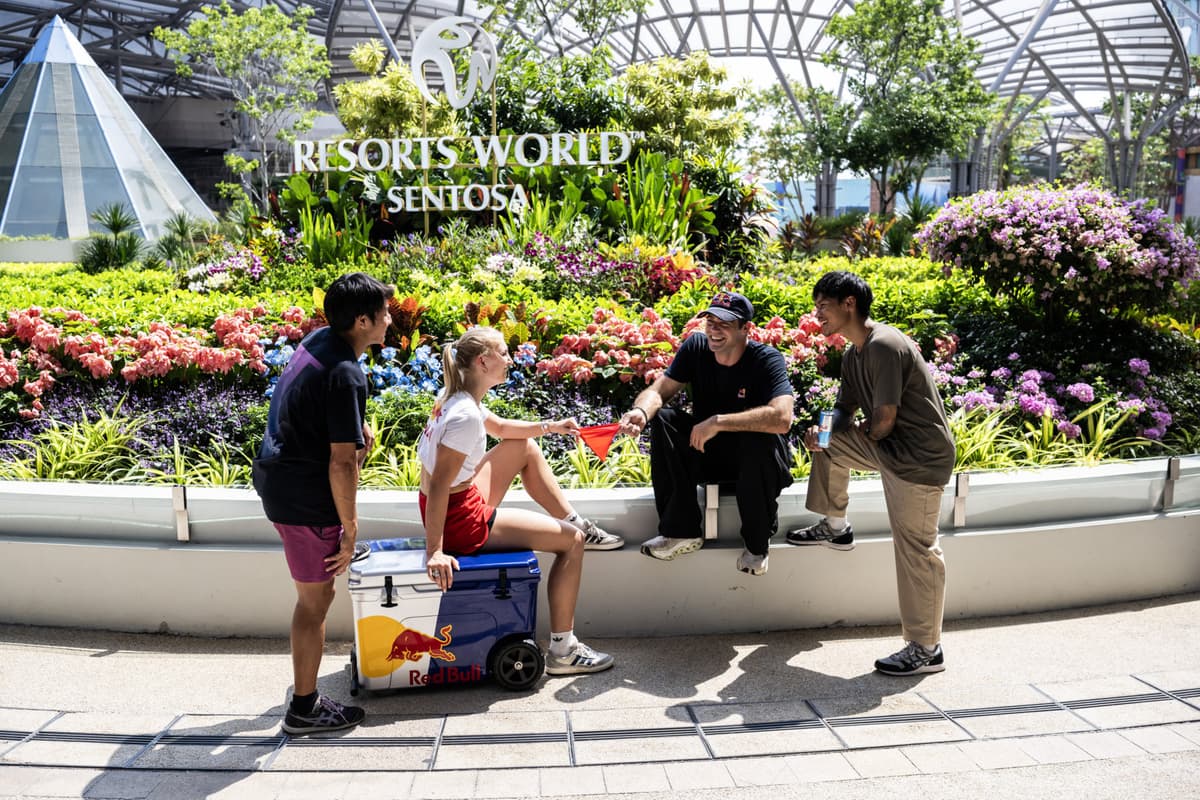
On September 30, Red Bull brought four freerunners to Resorts World Sentosa (RWS) for a capture-the-flag race across rooftops, attractions and architectural landmarks. The course pushed international athletes Dominic Di Tommaso and Noa Diorgina, alongside Thai freerunner Spinboy and Singaporean Koh Chen Pin, into spaces rarely seen as sporting terrain.
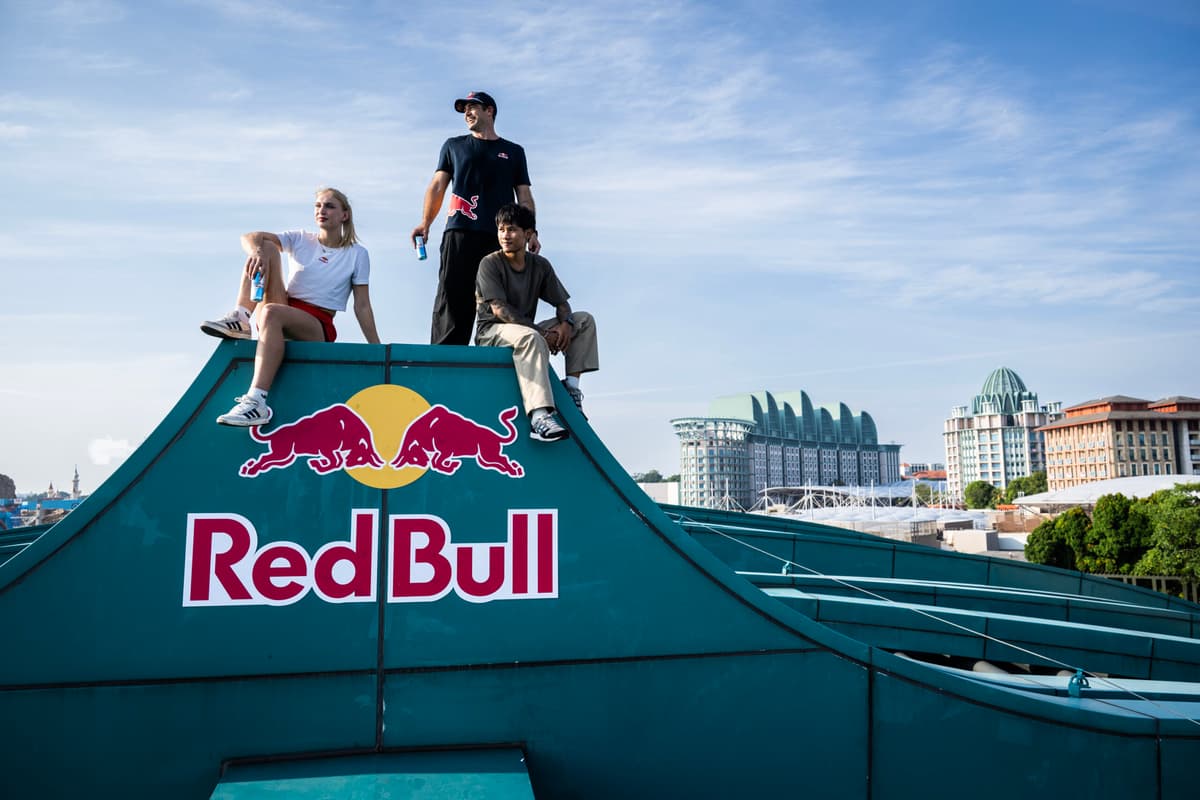
The starting point was the Singapore Oceanarium’s blue spine, a sweeping architectural feature that became the setting for a sequence of runs and flips 90 feet above ground. From there, the teams moved across the resort, navigating obstacles that demanded more than speed alone. At The Laurus, a Luxury Collection Resort, athletes cleared a succession of 10-foot rooftop gaps nine stories up, before continuing toward WEAVE, RWS’ retail and lifestyle destination.
The race eventually reached Universal Studios Singapore, where the competitors passed the iconic globe and Hollywood Boulevard before finishing above Far Far Away Castle. Outside Hotel Ora, Di Tommaso and Spinboy scaled exterior walls and leaped between handrails eight feet apart. Diorgina and Koh, meanwhile, took a different route, flipping through the Open Ocean gallery at Singapore Oceanarium. The course culminated in a sprint down the Grand Steps, with Di Tommaso and Diorgina contesting the final flag.
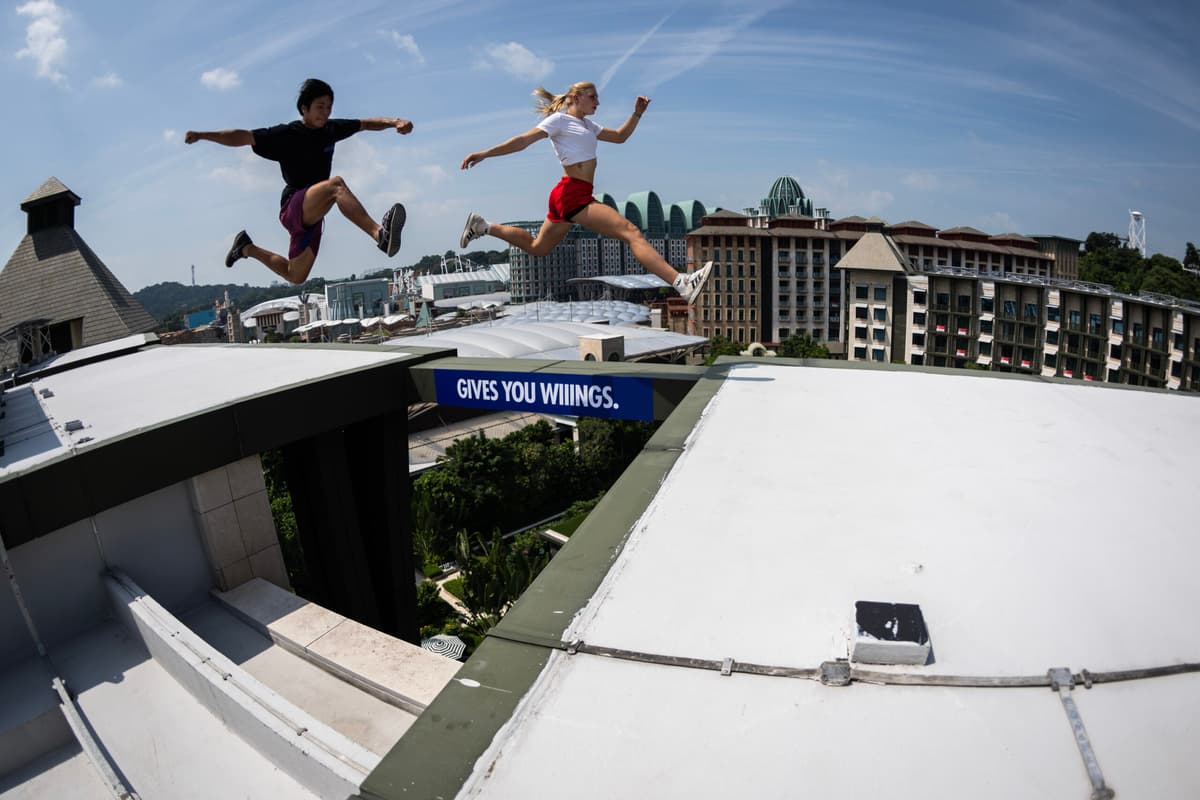
The spectacle was the obvious draw, but the setting gave the project another dimension. Parkour and freerunning turn the built environment into something to be read and navigated physically: a wall becomes a route, a railing an obstacle and an expanse of roof a test of judgment. At RWS, that instinctive reinterpretation of architecture unfolded across a resort destination, with professional supervision and risk assessments in place throughout the course.
For Di Tommaso, the appeal began with the locations themselves. “There is some amazing architecture here and I really wanted to just have the opportunity to express myself in the way that I love in this amazing location here at RWS,” he said. Diorgina, visiting Singapore for the first time, was particularly taken with the rooftops and the opportunity to become the first athletes to run across the Oceanarium’s roof.
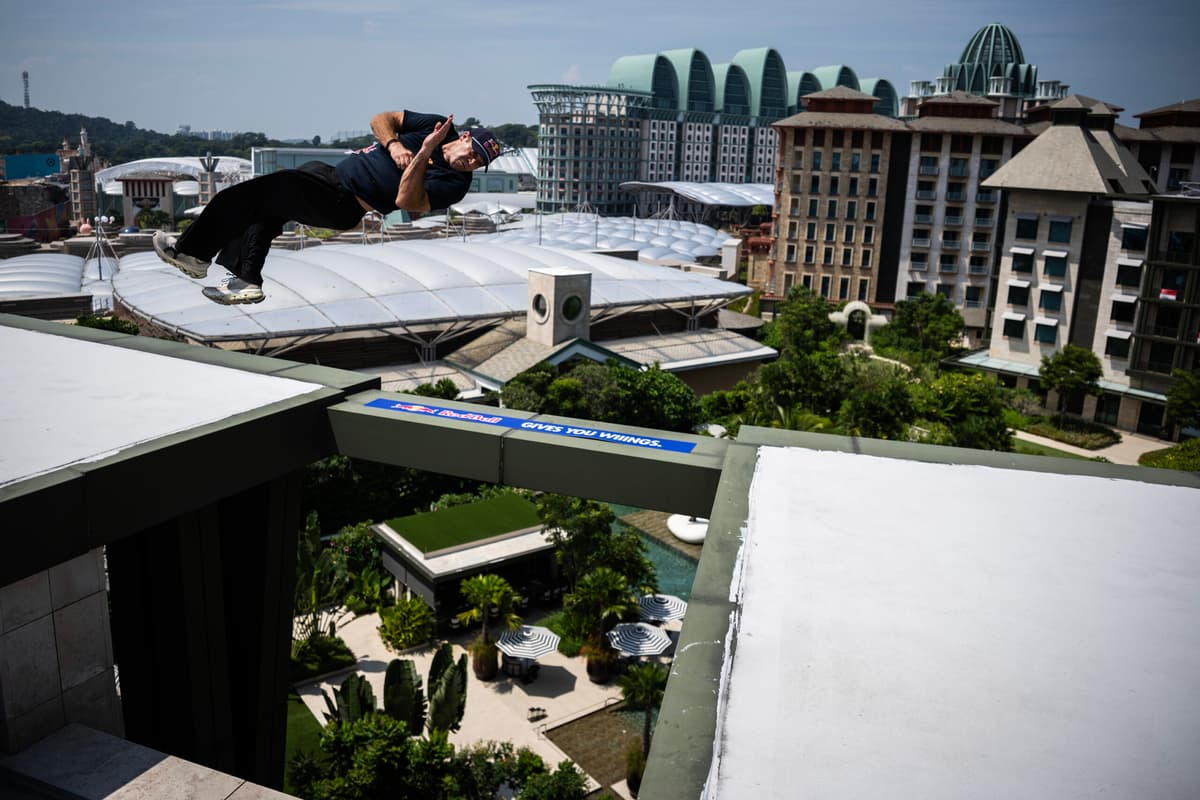
Yet the significance of the project extends beyond the spectacle of elite athletes negotiating extraordinary heights. Di Tommaso describes parkour in more fundamental terms: “learning to use your body.” It is a deceptively simple idea for a discipline often defined by its most dramatic feats. Beneath the flips and rooftop jumps lies an emphasis on movement, spatial awareness and physical control — skills that need not be reserved for professional athletes.
“I’ve seen elderly here in Singapore learning parkour for fall prevention, which is incredible to see and shows exactly what the sport can do beyond the tricks,” Di Tommaso said. His observation offers a different perspective on the discipline, shifting attention from what the body can achieve at its limits to how movement skills can remain useful throughout life. The race may showcase exceptional athletic ability, but the underlying interest in understanding one’s physical capabilities has a wider relevance.
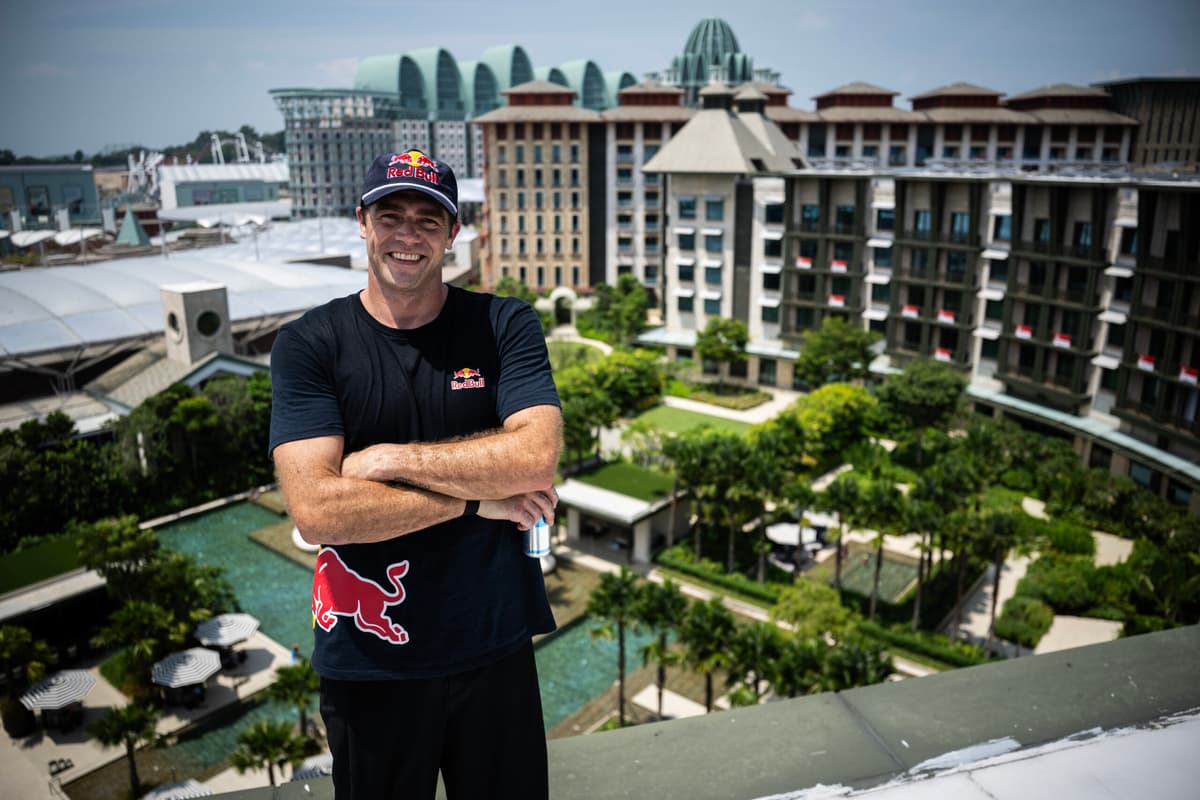
There is also a cultural dimension to staging such a project in Singapore. Parkour has developed across Southeast Asia through communities and crews that have helped establish the discipline beyond its more spectacular public image. Among them is Team Farang, which has contributed to the region’s international profile. Di Tommaso, who has visited Singapore over many years, has witnessed the local scene evolve.
“When I came it was very young and developing, much like the Australian scene, but now we’re seeing a lot more structure, a lot more attention from the general public and a lot more awareness as to what parkour is at its core,” he said.
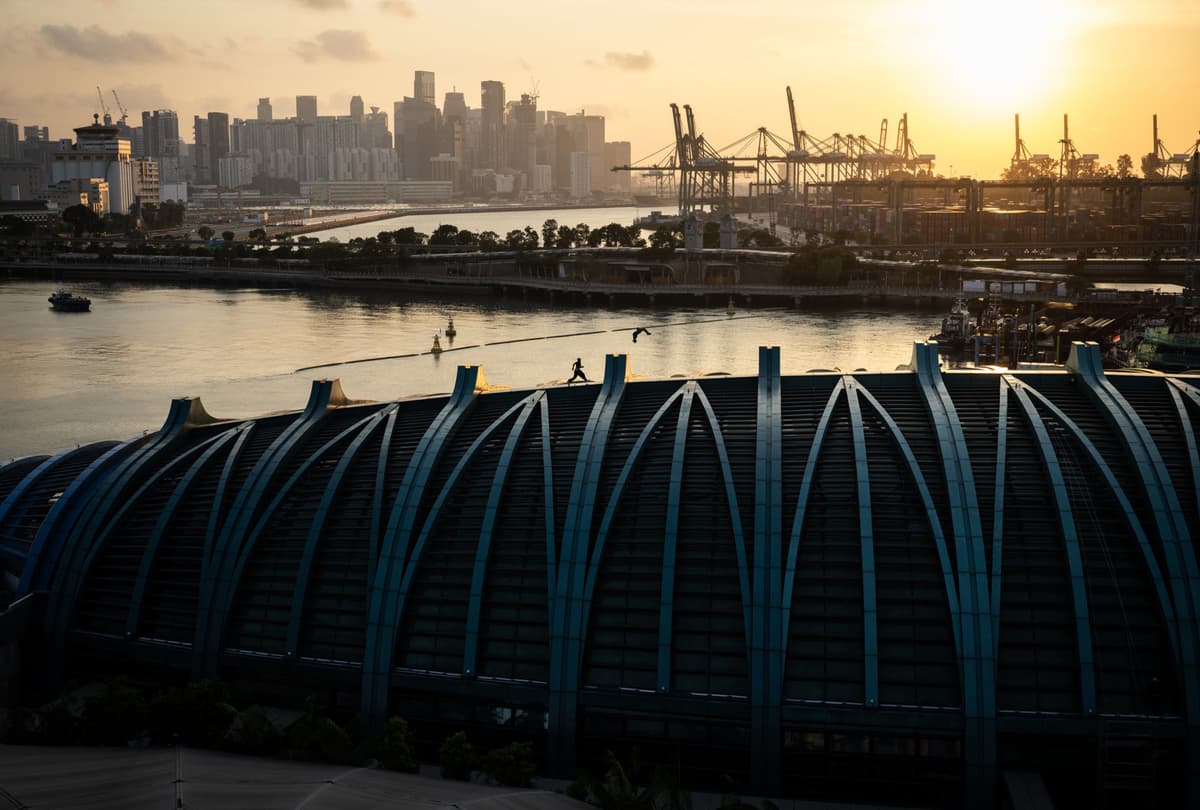
For Koh, the opportunity to perform on the resort’s rooftops was significant precisely because access to such spaces is unusual. “I believe Singaporeans will be shocked by this but also, finally Parkour having a voice in such a positive light can really boost our sport more legitimately,” he said. His remarks point to a tension at the heart of the event: a discipline associated with finding unconventional routes through the built environment now has the opportunity to do so with the explicit permission of a major destination.
That access does not diminish the physical demands of the course. Rather, it places the athletes’ skills in a setting where architecture, movement and public experience intersect. For RWS, the collaboration offers a fresh perspective on its attractions; for the athletes, it provides a rare stage on which to express their discipline. And for parkour in Southeast Asia, it brings a growing community into sharper focus — one whose ambitions extend well beyond the next spectacular jump.