


Building muscle after 30 isn’t about lifting heavier. It’s about training with greater precision, recovering with purpose and creating a physique designed to perform for years to come
The gym has a way of rewarding youthful confidence. In your twenties, every session feels like another opportunity to pile more weight onto the bar, squeeze out another repetition and walk away convinced that exhaustion equals progress. Fast forward a decade, and life looks rather different. Meetings replace lectures, long-haul flights interrupt routines and recovery becomes harder to take for granted. The good news is that muscles don’t suddenly stop responding after 30. What changes is the margin for error.
That shift matters more than many realize. According to Harvard Health Publishing, inactive adults can lose roughly three to five percent of their muscle mass each decade after age 30. Resistance training remains one of the most effective ways to slow that decline, preserving strength, mobility and metabolic while building alongside a more athletic physique. The objective, however, is no longer to train harder than everyone else. It is to train smarter than you did before.
One of the most valuable concepts for any man over 30 is something exercise scientists call the stimulus-to-fatigue ratio. It sounds technical, but the principle is surprisingly straightforward. Every workout draws from a finite recovery budget. The ideal exercise delivers as much muscle-building stimulus as possible while creating the least fatigue, allowing you to recover well enough to perform again in a few days instead of limping through the rest of the week.
That perspective changes how you view the gym. Rather than treating every lift as a test of strength, you begin choosing movements that consistently challenge the target muscles while sparing the joints. Bulgarian split squats, for example, can develop impressive lower-body strength with far less spinal loading than heavy back squats. Chest-supported rows reduce strain on the lower back while allowing the upper back to work harder. Likewise, converging machine presses or well-executed dumbbell presses often deliver a better chest workout than chasing another personal record on the barbell bench press.
The point is not that barbells have become obsolete. It is that maturity encourages discernment. An exercise deserves a place in your program because it produces results, not because it flatters the ego.
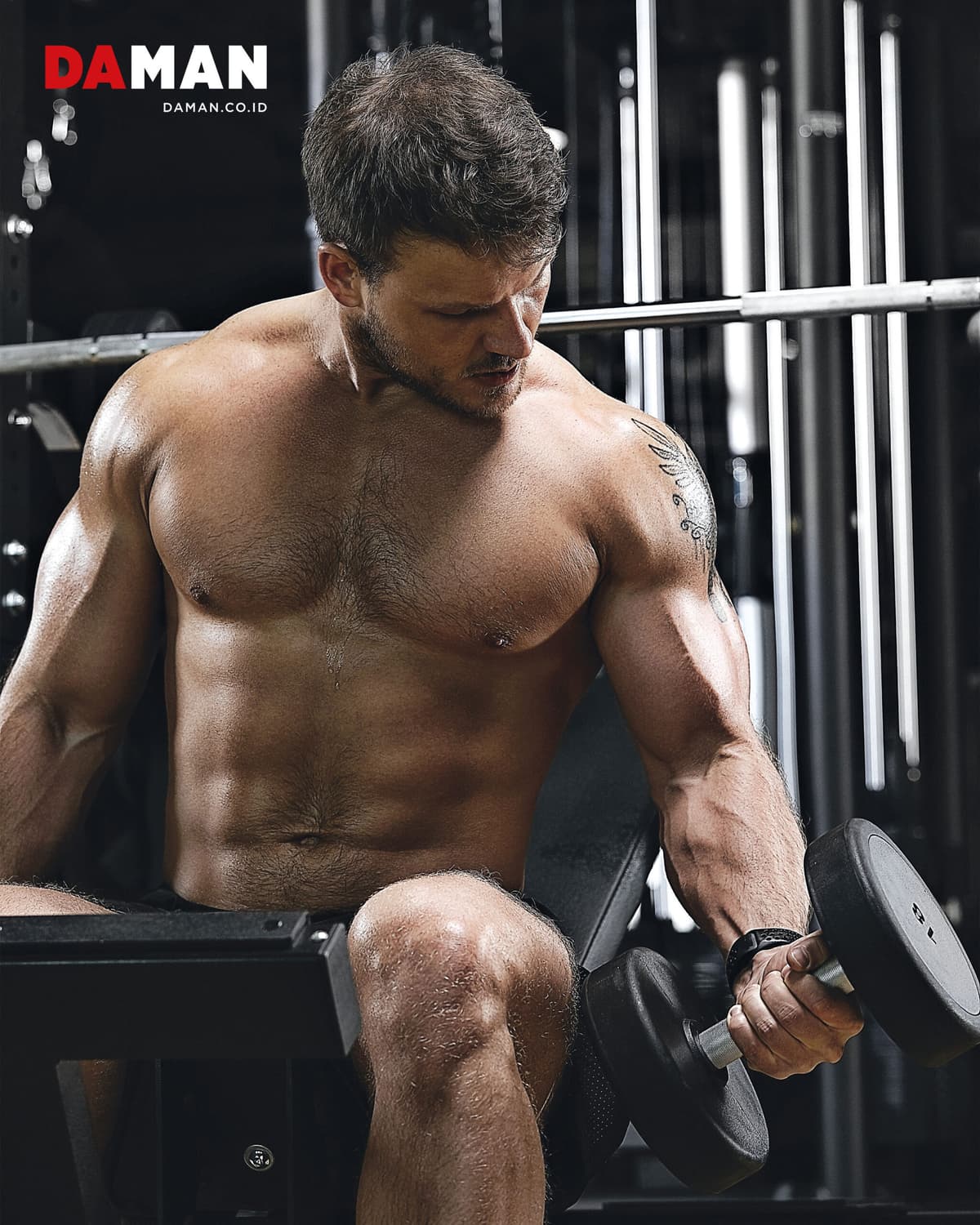
The same philosophy applies to how you perform each repetition. Muscles respond to tension, not bravado. The number stamped onto a dumbbell matters far less than the quality of the work it demands. Instead of relying on momentum, lower the weight with control for roughly two to four seconds before driving it back up with intent. Briefly squeezing the working muscle at the point of peak contraction further increases the quality of each repetition without adding unnecessary load.
Just as importantly, every set doesn’t have to end in complete collapse. Current evidence suggests that stopping with one to three repetitions in reserve often delivers nearly the same muscle-building benefits as training to absolute failure while producing significantly less fatigue. In practical terms, this means finishing a set knowing you could have completed another repetition or two if necessary. The workout remains challenging, but your body has far more resources available for recovery and the next training session.
Recovery, in fact, deserves to be treated as another performance metric. Ambitious professionals readily monitor business targets, investment portfolios and travel itineraries. Their physical performance deserves the same attention. Muscle is not built while you’re lifting weights. It is built afterward, through muscle protein synthesis supported by adequate nutrition, sufficient sleep and well-managed stress.
This is where restraint often outperforms excess. Three or four focused sessions lasting about 45 minutes each can be remarkably productive when every exercise has a clear purpose. The American College of Sports Medicine continues to support resistance training performed consistently across the week as an effective strategy for building muscle, making it entirely possible to build an impressive physique without living in the gym. That leaves room for work, travel and everything else that defines modern success.
Ultimately, building muscle in your thirties is less about resisting age than embracing experience. The lessons learned in the office often translate surprisingly well onto the training floor: Better decisions compound, consistency outperforms intensity and precision delivers a stronger return than impulse.
A tailored jacket always hangs better on broad shoulders and confident posture. Yet the real reward extends far beyond appearance. It is arriving after a 14-hour flight without your back protesting, carrying your own luggage without hesitation and stepping into every meeting with the quiet confidence that comes from a body built to perform.
That may be the greatest advantage of training after 30. You are no longer chasing the strongest version of your younger self. You are building a more capable version of the man you intend to become.
IMAGE ISTOCK