


THE GROWING PAINS. Fueled by a natural passion for acting, Christopher Larkin is adapting to the growing pains to making it in the showbiz. While classic plays serve as his acting foundation, the honest young actor is sharing his admiration over Sidney Poitier and what’s in store for him.
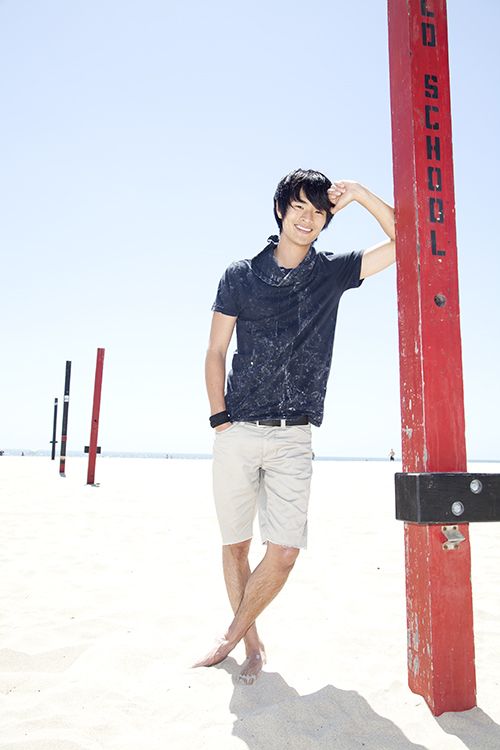
DA MAN: Can you tell us a little bit about what you’re currently working on?
Christopher Larkin: I’m currently working on an off-Broadway play called “Fast Company.” It’s a piece that my girlfriend and I have been developing together over the past four years. We’re both very grateful to take part in the New York production. We just finished a week of previews and are now officially up and running at the Ensemble Studio Theatre through April 6th.
DA: You play Monty Green in the TV series, “The 100,” a delinquent who was exiled to post-apocalyptic earth for distributing illegal substances. How similar are you to your character?
CL: On the growing or distributing illegal substances front, I can honestly say that’s one fork in the road where Monty and I part ways. We are similar though in the sense that neither of us is generally the first person to take the lead. Leadership is something we both find in our own time.
DA: How did you get involved with this project?
CL: I received an audition while in Hawaii for a wedding. Given the tight time limitation, I was forced to make a self-tape after a sleepless red-eye flight into LAX. I wrote a scene of my own based off the sides, put it on the flip cam and sent it to my agent. I had a Producers’ Session the following day, but that tape was essentially responsible for getting me through both the network and studio tests. To be honest, I thought my chances of booking a pilot were nearly nil by that point. Being a part of this series has been a gift in many ways.
DA: What is it like working with such a diverse cast who play distinctive characters?
CL: I have to hand it to The CW for assembling such a diverse cast. I think the show requires a fair amount of diversity given that we’re representing the last remaining members of mankind. We’re all very different as individuals both on and off screen, but we’ve come together well as an ensemble. The range of personal and professional experience amongst us is wide, but that only helps bring us closer in the end.
DA: What would you like to see happen to your character?
CL: At the risk of sounding like a broken record, I’d like to see Monty explore some form of a romantic arc as time goes on. Whether he’s successful or not in this venture doesn’t matter to me. The attempt is all. This is a crucial part of the adolescent experience, as well as the human experience and its one that Asian-American males are denied time and time again on screen. So yeah, that would be nice. Off the soapbox now. Next question.

DA: What can we expect from upcoming episodes of “The 100”?
CL: Expect the unexpected. That’s the beauty of any sci-fi series. Everything is left up to the imagination when it comes to creating a world from scratch. I’d also warn viewers not to get attached to anyone too quickly. “Game of Thrones” has ruined us all.
DA: The theme of the post-apocalyptic existence is a theme that we’ve seen a lot lately (i.e “The Hunger Games,” “Divergent”). Why do you think there’s this fascination with the post-apocalyptic world?
CL: It’s important to remember that the hero in all these post-apocalyptic stories usually triumphs over adversity. Even when the world appears to be in ruin, mankind finds a way to come out on top. People are obsessed these days with looking on the bright side. Maybe this eternal optimism gets an adrenaline kick when characters are shown finding hope in the bleakest of situations. It puts all our trials and tribulations into perspective. Makes the many things we complain about seem small.
DA: In real life, how would you fare, when placed against your will on a, say, deserted island?
CL: Horribly. Even hearing titles like “Robinson Crusoe” or “Cast Away” makes me nervous. Wilson might last a day before facing deflation. I wouldn’t make it a month.
DA: If you find out that you’re exiled to a deserted planet, what things would you bring?
CL: Again, I wouldn’t make it a month. Doesn’t really make a difference where I find myself deserted. If I wanted that month to be as enjoyable as possible, a steady supply of oxygen wouldn’t be a bad idea. I hear that it’s in short supply outside of our atmosphere. One month’s worth of frozen pizza to be consumed at every meal. A case of red wine and a bottle or two of Lagavulin. Water, I suppose. And David Foster Wallace’s “Infinite Jest.” This is the only scenario where I’d ever touch that book again.
DA: What was it like bagging a couple of roles for off-Broadway productions before you’d even graduated college?
CL: I have no idea how I managed to make it work, but I was able to fit in three professional productions around my courses prior to college graduation. I do have the Fordham Theatre Program to thank, which allowed me to pursue work outside their walls. I felt that if I was in the theater capital of the states, I might as well make the most of it. I never took those roles for granted. The New York scene was entirely new to me and I just tried to keep up with the veterans I found myself suddenly sharing a stage with. I’ve always felt that each job is an education within itself. In that sense, I earned two degrees. I was able to take the lessons I was learning at university in the day and apply them directly to a professional situation at night.
DA: How’s acting for TV different from acting on stage?
CL: Each medium requires a different set of muscles. Even the most basic rules can make for a difficult adjustment period as you switch from one to the other. Those adaptation skills improve over time. I come entirely from a theater background and am much more comfortable in that world. Spending weeks on the same material. Running the scenes in chronological order. Finding all the colors in every moment. My definition of “rehearsal” vastly changed after my first season on “The 100.” After six months on set, there’s still a lot that I have to learn. My goal has always been to make big mistakes and consciously work to avoid them as the shoot continues.
DA: What’s your favorite play?
CL: “A Raisin in the Sun.” Hands down. I caught a production my first year of college at Hartford Stage. I’ve never been so moved at the theater. The goal would be to play Walter Lee, but I can’t see that happening anytime soon. It’s not my story to tell.
DA: What plays would you like to take part in?
CL: I’m most interested in helping develop new works. Telling stories that have never been told before. It’s important to keep the classics alive, but I want to take part in plays that focus on the world as it stands today. I’ve been lucky enough to get involved with New York establishments such as The Lark and New Dramatists, which are fully dedicated to the growth and development of emerging playwrights. Playwrights like Jordan Harrison and Harrison David Rivers, who are constantly challenging both the form and the norm with every piece they create. That’s the kind of work that excites me.
DA: You’ve done TV and theater. What’s next? Any desire to tackle film? What about musicals?
CL: I’m interested in tackling as diverse a range of projects as I can. I’ve finally started becoming comfortable with being uncomfortable. That’s just part of the deal. A musical sounds like a huge undertaking given my lack of experience, but the projects that take you out of your element are the ones that help you grow the most. Whatever comes my way, I’d like not to lose my connection with the New York theatre scene. It’s a tight community filled with extremely talented people. It would be a real shame to fall out with that crowd.
DA: You’ve started acting at a young age. What made you want to act?
CL: My story’s a total cliché by this point. Everyone’s heard it before. Here goes: I’ve enjoyed performing for other people from a young age. I auditioned on a whim for a middle school production of “Hamlet” and was cast in the title role. I enjoyed every second of the process. I pursued acting through high school. I pursued it through college. I’m now pursuing it as a career. I wish the tale was more interesting, but it’s followed a pretty natural progression. The one oddity in the story is that an all-white suburban town found it entirely okay for the Prince of Denmark to be Asian. Didn’t question it for a second. Despite continual claims of equal employment opportunities, just try to find an equivalent response in the professional world.
DA: What other professions would you like to try, aside from acting?
CL: It’s hard to say. I don’t think I’m suited for much else. I could make due in a handful of other professions, but I’m not sure they’d fulfill me in the same way. I’ve always said that in another life, I would’ve liked to pursue a career in music. Another highly unstable lifestyle choice but if we’re staying in the hypothetical, I’d still want to be connected to the arts in some way.
DA: Who is your acting role model?
CL: Sidney Poitier. He will always be an inspiration simply (and not so simply) because he found a way to overcome the racial barriers through out the industry, as well as the country at the time. “To Sir, With Love” is number one in my book. It’s far from his best film, but it had the largest impact on me as a kid.

DA: What’s your favorite TV show?
CL: I feel like the answer to that is constantly changing. I haven’t owned a television in years, which sometimes makes it difficult to stay in the know. Thanks to the Internet, I’ve managed to stay up-to-date with “Game of Thrones,” “Breaking Bad,” and “Louie.” The original “Twilight Zone” with Rod Serling has always been a favorite. People keep saying that television has entered another Golden Age and it’s true. There are so many incredible series out there. It’s a bit depressing to know that I’ll never catch up on all of them.
DA: What do you do for fun?
CL: I always have the best time with people I connect with on a musical level. There’s nothing better to me than getting lost in a jam session. If no one’s around, I do just fine on my own with a guitar. I lose all sense of time when I’m writing / recording a new song. On a completely separate note, I can’t cook to save my life so meals out with friends are always welcome.
Photographer: Yann Bean