


Simple in design but rich in symbolic meaning, Cartier’s Trinity collection remains an everpresent beacon of unity and diversity that now celebrates its centenary
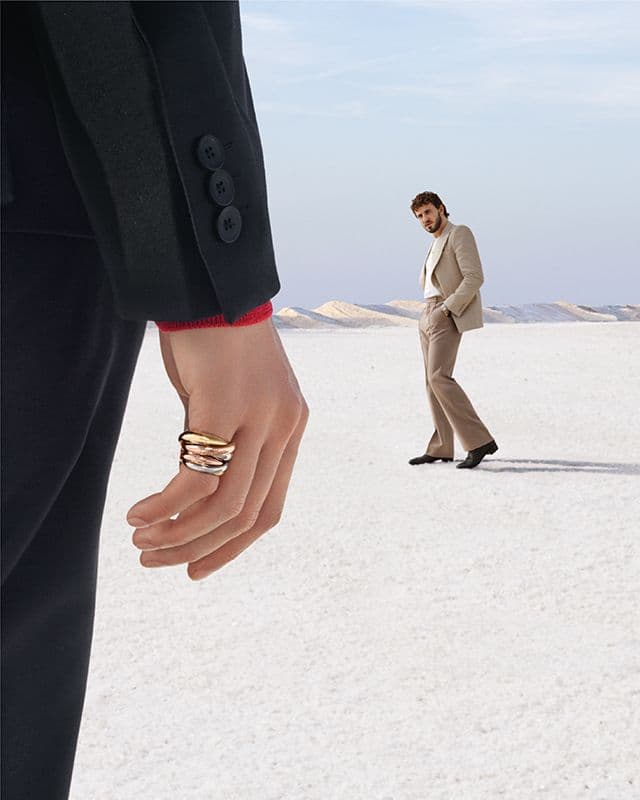
This chapter of Cartier’s legacy began with the Trinity ring. Born out of Louis Carter’s fervent imagination, it was ahead of its time, emerging during the Roaring ’20s. As the creative force behind the famed jeweler, Louis dared to return to the basics of pure design, changing the course of history by bringing classic jewelry into the modern age and, ultimately, creating what is arguably the brand’s first design icon.
THE STORY OF THREE
Three is a magic number for Cartier. It tells the story of three brothers—Louis, Pierre and Jacques—and of three historic Cartier boutiques in Paris, London and New York. The first iteration of the Trinity ring from 1924 features three intertwining bands crafted in three precious metals. The first is yellow gold which represents fidelity; the second band comes in platinum to symbolize enduring friendship; and lastly, rose gold to epitomize true love. The trio of colors also symbolizes unity and diversity, which are among Cartier’s most cherished values. Behind Trinity’s clean lines, precise shapes and perfect proportions lie deeper meaning and values integral to its existence.
THE NEW TRINITY
The Trinity ring has always had the ability to reinvent itself. Whether through simple or daring designs, Maison Cartier constantly offers new twists on the classic piece. And now, to commemorate its monumental 100th anniversary, Cartier has created multiple iterations of the beloved Trinity ring, including an XL version alongside a reissue of the Trinity XL bracelet that was first released in the 2000s.
The mobility, the clean lines and three colors are still there, but the shape has evolved, with bands now showing a creative and daring distortion. This creative approach from Cartier’s creative studios has resulted in a variation of the timeless Trinity.
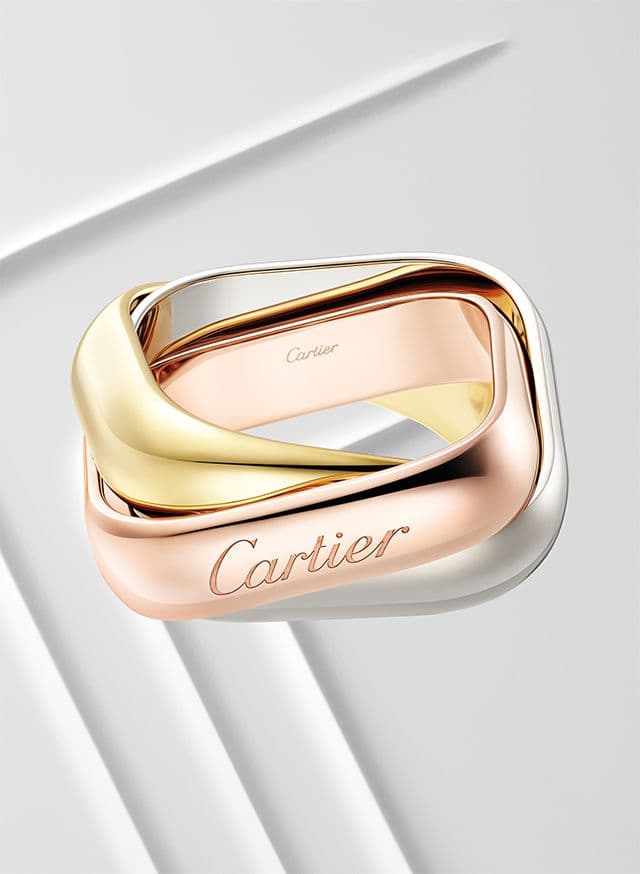
Furthermore, the 2024 anniversary version of the Trinity collection deviates from its original round shape, coming in a cushion-shaped model as well as a modular one with various finishes. Despite a more angular form, the rings still slide on easily like their predecessors. The cushion-shaped version also comes paved with diamonds, and is made available as a bracelet as well as a pendant.
Cartier’s Director of Watchmaking and Jewellery Design, Marie-Laure Cérède, mentioned that the modular Trinity takes a counter-intuitive design approach: construction then deconstruction. The bands can be worn as one wide, large band or as three pieces, allowing for multiple ways to wear them. When worn interlocked, the three bands unfold like a construction game, revealing their diamonds as they move. The reissue of the Trinity bracelet replicates the mobility and fluidity of the Trinity ring, gracefully encircling the wrist.
THE THREE FÊTES
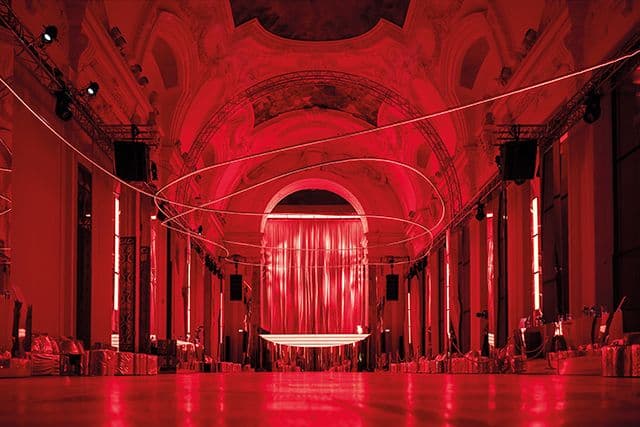
To celebrate the Trinity’s centenary, Maison Cartier once again uses the magic number three and held three massive events in three cities with strong significance in Cartier’s history: Paris, New York and London. The celebrations began in New York on February 1 at the Chelsea Hotel, then continued in London at Ladbroke Hall on February 5 before culminating on February 7 at the Petit Palais in Paris, with performances by Sia, Labrinth and Diplo, followed by the dance collective La Horde.
The celebrations didn’t stop there, however. Cartier launched a new campaign film for the Trinity 100th anniversary collection starring the brand’s global ambassadors, including Paul Mescal, JISOO, Yara Shahidi, Jackson Wang and Labrinth. Linked by Trinity’s interlocking rings, they embody all forms of love and the infinite possibilities of important connections: family, friends, infinite, indefinite.
Cartier’s Trinity stands as a testament to the values that the brand intends to pass on and embody. It’s the highest expression of creativity and lasting proof of its expertise in fine jewelry craftsmanship.
TEXT Anindya Devy