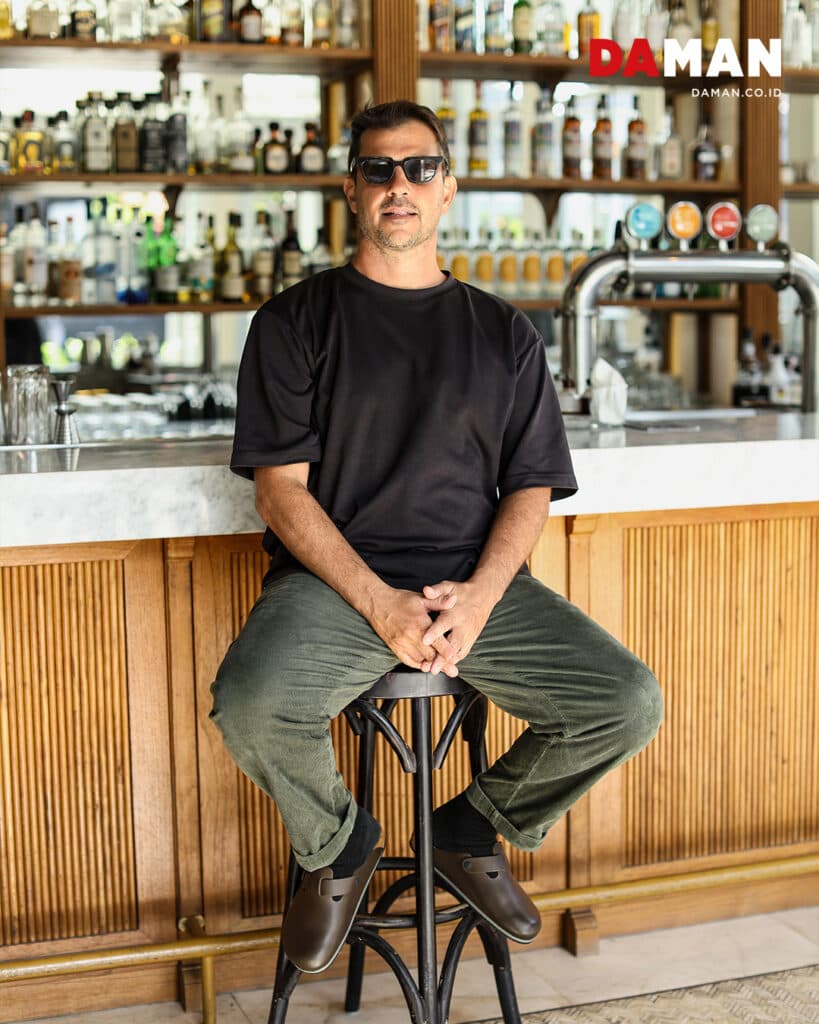


From the dining rooms of Bartolo and Lulu Bistrot to the vintage stores of Japan, the Brazilian hospitality entrepreneur has developed a personal style grounded in simplicity, versatility and experience.
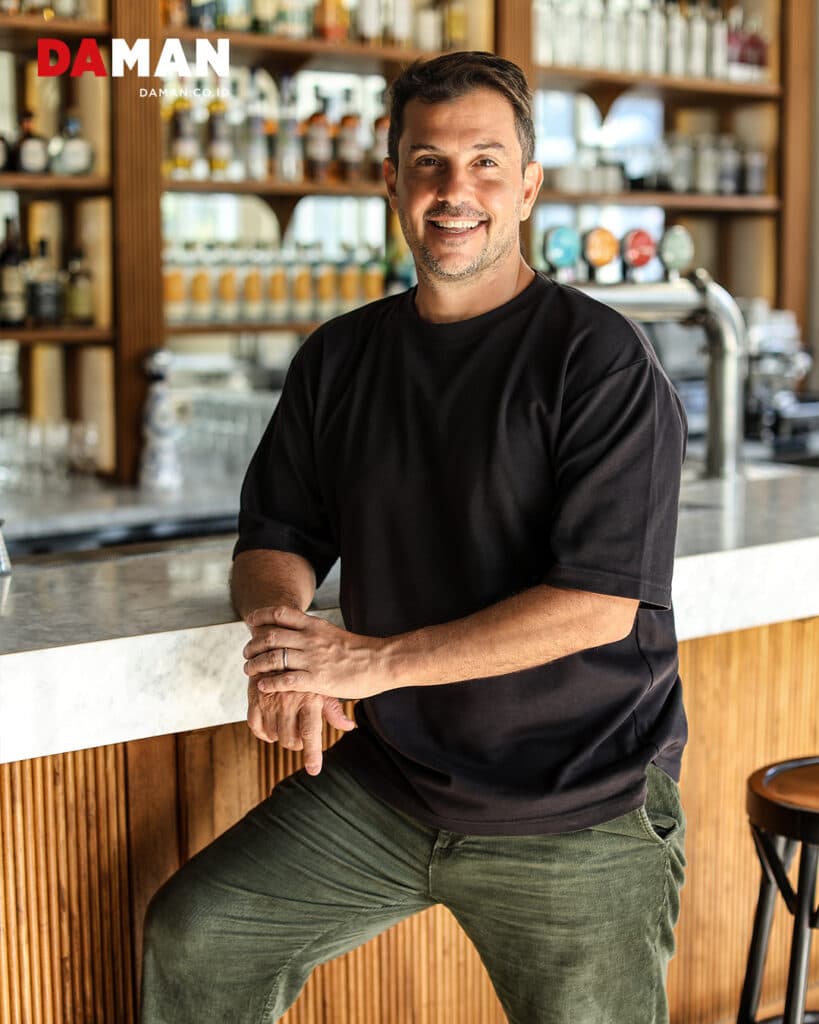
In Bali, getting dressed is rarely an abstract exercise for Rafael Nardo. A day might involve riding a motorbike beneath the tropical sun, navigating a busy kitchen or moving between tables in a dining room. For the Brazilian hospitality entrepreneur, whose venues include Bartolo in Uluwatu and Lulu Bistrot in Canggu, clothing must accommodate the realities of his surroundings without compromising on appearance.
“We are in Bali, right? So, getting dressed here involves probably being under the sun, riding a bike or being close to the beach. So, comfort is needed,” he says. Yet comfort is only part of the equation. When it comes to his restaurants, Nardo makes a conscious effort to dress appropriately for the spaces he has built. “Our guests, they make an effort to come. So, we want to make sure we’re wearing appropriate for the venues and spaces that we build.”
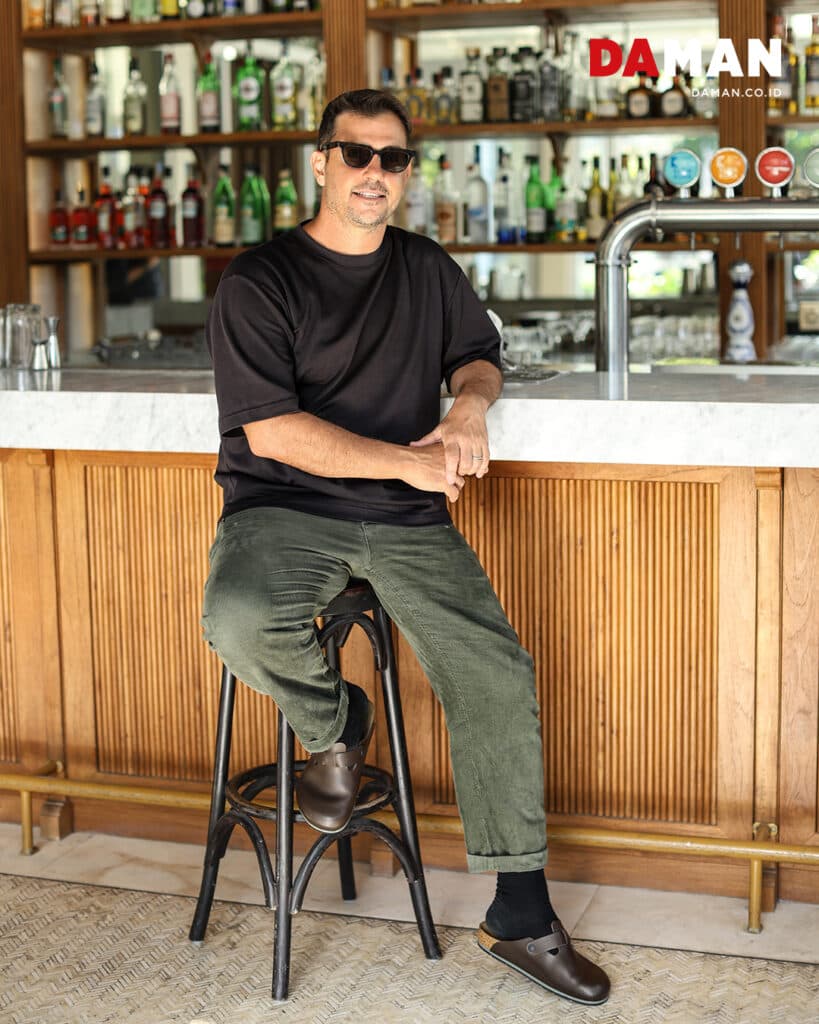
It is a philosophy that extends to his everyday wardrobe: simplicity, without the appearance of trying too hard. In hospitality, he explains, every detail matters, whether in the atmosphere of a restaurant or the way its people present themselves. When everything works in harmony, there is little need for excess.
The balance becomes particularly apparent in the transition between kitchen and dining room. Hospitality is physically demanding, with long hours, heat and the intensity of service, yet composure remains essential. Nardo’s solution is refreshingly straightforward: loose trousers, good leather shoes and a simple watch. The combination offers enough polish for the dining room while allowing him to move comfortably through a working environment.
His idea of understated confidence finds a parallel in an unexpected place: Formula One. Nardo is a longtime admirer of Ayrton Senna, the Brazilian racing legend whose influence extended well beyond the track. What appeals to him is not an elaborate wardrobe but the driver’s apparent ease in simple clothes.
“Wearing jeans and just a white polo shirt, it’s just a lot of confidence and very simple. I love that,” Nardo says. It is a useful reminder that personal style need not announce itself loudly to make an impression.
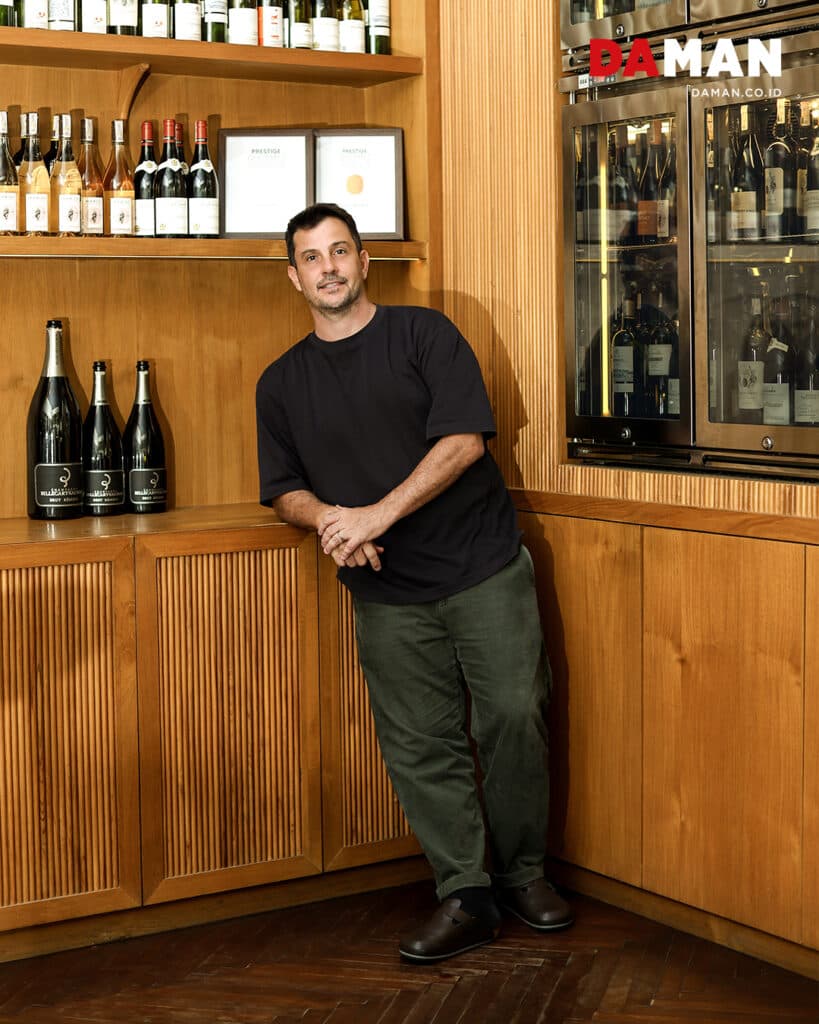
That instinct also informs his preference for vintage clothing over the avant-garde. Nardo remains attentive to developments in fashion, just as he does in food and music, but he has little interest in following every new trend. Some of his most enduring style references come instead from travel and the discoveries made along the way.
One particularly meaningful item is a hooded winter vest he bought in Japan more than 20 years ago. He still wears it in Bali, whether heading out on a boat or riding a motorbike when the weather turns cool. Its quality has kept it in rotation, but its personal significance runs deeper. During that first visit to Japan, Nardo discovered Italian designers and vintage stores filled with American-style clothing, including Levi’s jeans. The vest remains a tangible reminder of that experience.
Travel continues to shape his outlook. Whether exploring a city with his family or researching a destination, he enjoys walking extensively, visiting museums and art events, and, naturally, eating. His ideal travel wardrobe must accommodate a day of exploring on foot before allowing for an impromptu dinner somewhere more refined. Versatile footwear, in particular, becomes essential.
For Nardo, dressing appropriately is ultimately a matter of consideration. If an occasion has a dress code or a clear sense of direction, respecting it is a way of acknowledging the host and the effort behind the event. The principle is familiar from hospitality itself: making people feel valued often comes down to paying attention to details others might overlook.
That sensitivity has developed with time. Nardo admits that his earlier style was more extravagant, but experience has changed what he appreciates. He compares the process to learning about food and wine: one must taste widely, including things that disappoint, to recognize genuine quality.
Fashion moves quickly, and staying curious still matters. But knowing what deserves a place in one’s wardrobe is a different skill from knowing what is new. For Nardo, the distinction is where personal style begins.