


FINISHING TOUCHES. Even if only a few people will ever see it, no component of a fine watch, from the case to the bridge, comes without a picture-perfect finish
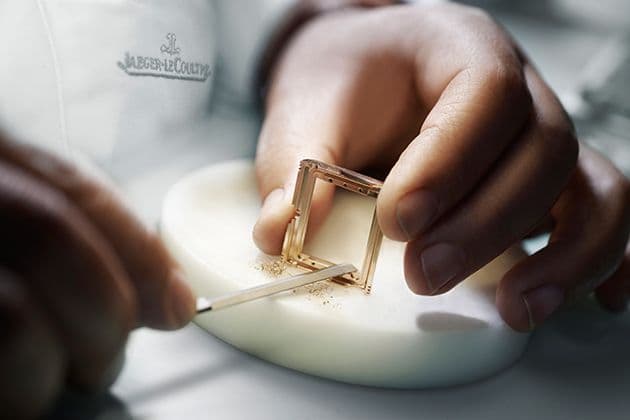
Hand-finishing on the interior edges of a Jaeger-LeCoultre Reverso case
What is it that can make some watches cost as much as—if not more than—say, a new model of a top-of-the-line luxury car? The materials that go into a watch from top-tier brands like Patek Philippe or Audemars Piguet is definitely a big factor, but this pales in comparison to the level of handcrafting involved in a bona fide fine watch.
Speaking of handcrafting, this brings us to one of the most under-appreciated yet important (as in, it can sometimes contribute to a third or even half of a watch’s price) parts of watchmaking: finishing.
The Start of the Finish
The metal parts that make up a watch movement are not stamped but milled. Naturally, this will leave visible traces and rough edges. The various finishing processes used throughout the industry are aimed at getting rid of these imperfections and, at the same time, turn the aforementioned parts into aesthetically pleasing bits of art.
What many people don’t realize, however, is how much finishing is done to the internal, i.e. unseen, parts of a watch. That’s why watching an expert watchmaker tinkering on a movement is much more intriguing than watching a mechanic overhauling an engine. It is often argued that this is the main distinguishing quality that separates fine watches from common timepieces.
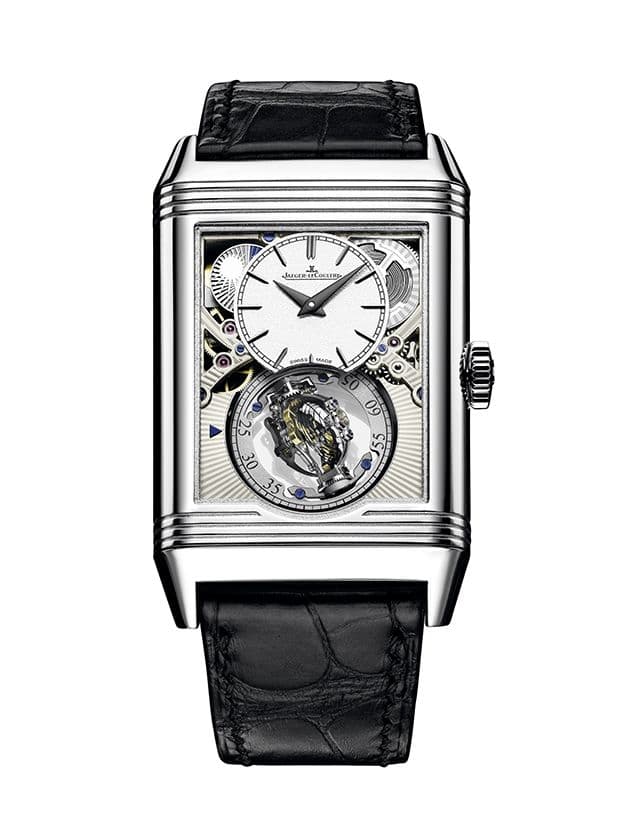
The Jaeger-LeCoultre Reverso Tribute Gyrotourbillon sporting various decorative patterns on the dial
Now, proper polish work also ensures proper functioning parts. The smooth surface of a finely polished barrel and barrel cover, for instance, ensures that the mainspring can supply power consistently, while finely finished pinions can help reduce wear and tear. Still, the aesthetic properties conveyed by finishing are a huge deal in the industry. Take Patek Philippe, for example, where components for a new movement must be approved by an aesthetic committee of two: brand owners Thierry and Philippe Stern.
All that being said, as with just about any aspect of fine watchmaking, the path to appreciation begins with understanding. So, here, we invite you to take a closer look at some of the most popular finishing processes you may encounter in your quest for your next ticker as well as individual patterns or motifs that you might encounter during your journey in the world of haute horlogerie.
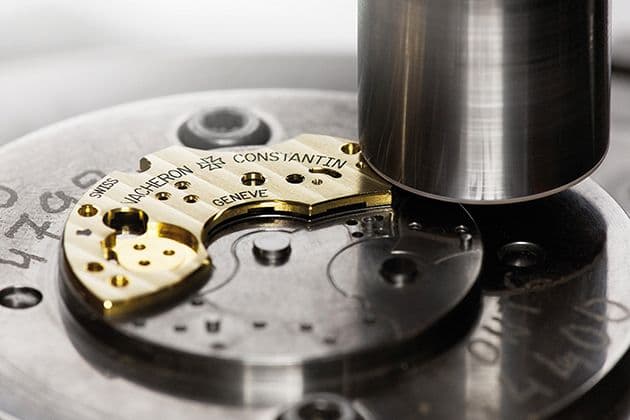
Creating the Côtes de Genève motif for a Vacheron Constantin movement part
Côtes de Genève
This is perhaps the most easily recognizable movement finish, although that doesn’t make it any less appealing. Côtes de Genève is usually translated into “Geneva Stripes,” but literally means “The Coast of Geneva” as the term is used to describe a finishing motif that looks like waves that lap upon a shore. Technically speaking, what we have is a series of parallel bars created through abrasion, with each bar or stripe containing a finely brushed semi-circular motif within it. A circular version of Côtes de Genève also exists with concentric circles replacing the parallel bars.
Interestingly, besides the refined visual effect, the Côtes de Genève—which, even more technically speaking, is a series of tiny scratches traced into the material—acts as a particle trap, to catch dust and other micro particles swirling inside a workshop that would otherwise end up inside the movement.
hand beveling
Guilloché
Among the many finishing techniques, this is the one that turns mere timepieces into luxurious works of art. Pioneered by A.L. Breguet, founder of his namesake brand, guilloché entered the history of watchmaking during the 1780s. The guilloché technique is most often used on movement and dials, but can also be found on a watch’s case or its case-back. The result that we see is an intricate and repetitive pattern engraved very, very precisely on a metal surface.
Traditionally, guilloché is done using specially-built cutting machinery such as the straight-line engine or, more famously, the rose engine. The latter uses a series of rosettes, which are templates to guide the actual cutting process. While it is technically a machine, a lot of skill and expertise go into operation of the rose engine.
First of all, selecting the cutters or drill bits and the placement of the rosettes needs to be absolutely perfect. Then, the speed of the engine’s rotation and the amount of pressure applied to dial or case is manually controlled by the guillocher. And mind you, unlike, say, an enameller painting an intricate design on a watchcase using the tiniest of brushes, a master guillocher paints an intricate design on a watchcase using a hulking piece of industrial equipment. Enameling is an extremely taxing art, but coaxing a piece of machinery the size of a car engine to create a tapestry of elaborate lines—each as thin as a human hair—is beyond impressive.
Nowadays, old-school rose engines are becoming increasingly rare as they are no longer produced. The people proficient in using these machines are also becoming rarer, especially as automated guilloché machines are becoming more and more advanced. As such, handmade (or hand-guided, if you want to be technical) guilloché is a true mark of luxury.
Now, guilloché allows a master artisan to create a wide variety of patterns, but there are a number of motifs that are particularly well-known: There’s the Clous de Paris, hollowed lines forming a tapestry of tiny pyramids (created by Breguet); Sunburst, lines radiating from a central point; Grande Tapisserie, rows upon rows of identical squares (this one is a signature of Audemars Piguet for the Royal Oak watches); and many more.
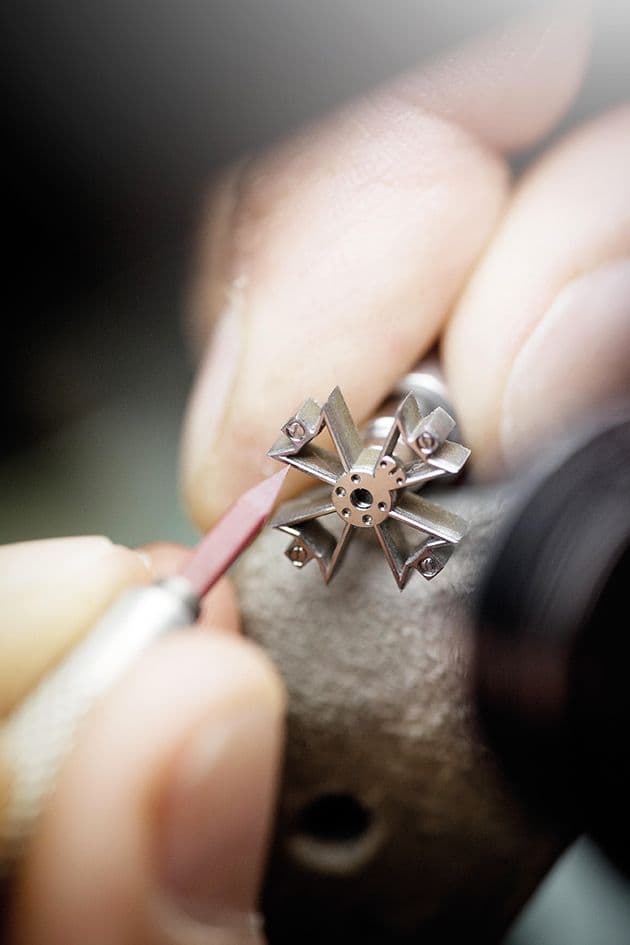
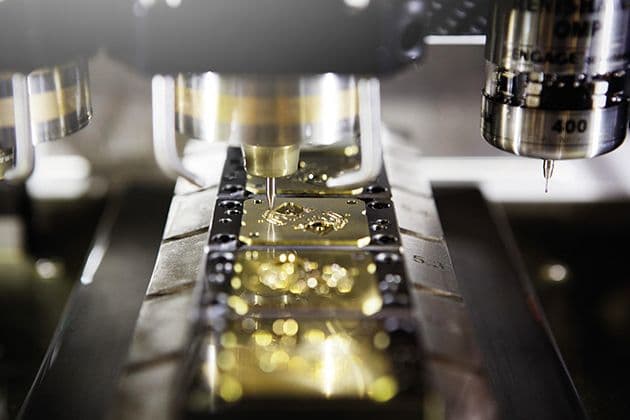
Close up of a CNC machine used in movement finishing
Anglage
Any watchmaker worth his salt will tell you that there is no such thing as an unimportant or less important component. And that’s why we have finishing processes like anglage (or chamfering in English), which is mainly used for movement components that are more than likely kept unseen, like the bridge and pinions.
As hinted by the name, this technique involves beveling to smooth the edges of a component and create a 45-degree angle. While this can be done by machine, interior angles are commonly done by hand. Saying that this is a difficult process would be an understatement as the smoothness, width and polish of the edges have to be absolutely consistent across every component. So, while it’s mostly hidden, anglage is a mark of quality for top-tier movements.
Perlage
The name of this finishing technique is the French word for “pearling,” and is easily recognized by its shape: Small, overlapping circular patterns. Perlage is most often employed on a watch’s top and base plates.
Mirror Finish
While it may sound simple, achieving a mirror finish on a movement component is an arduous process. The component is polished repeatedly using diamond paste, starting with a coarse grain and gradually moving to increasingly finer grains. The absolute best mirror finish that can be achieved is known as black polish. Besides being totally smooth and unblemished, the surface will also appear pitch black when viewed from certain angles as it absorbs all light hitting it. Alternatively, when viewed from the opposite angle, its reflection will be intense and un-diffused.
As such, the mirror finish often becomes the most visible and easily recognizable type of finish, and is often employed to draw the eye toward parts that are supposed to be noticeable like the bridges of a tourbillon or the hammers of a minute repeater.
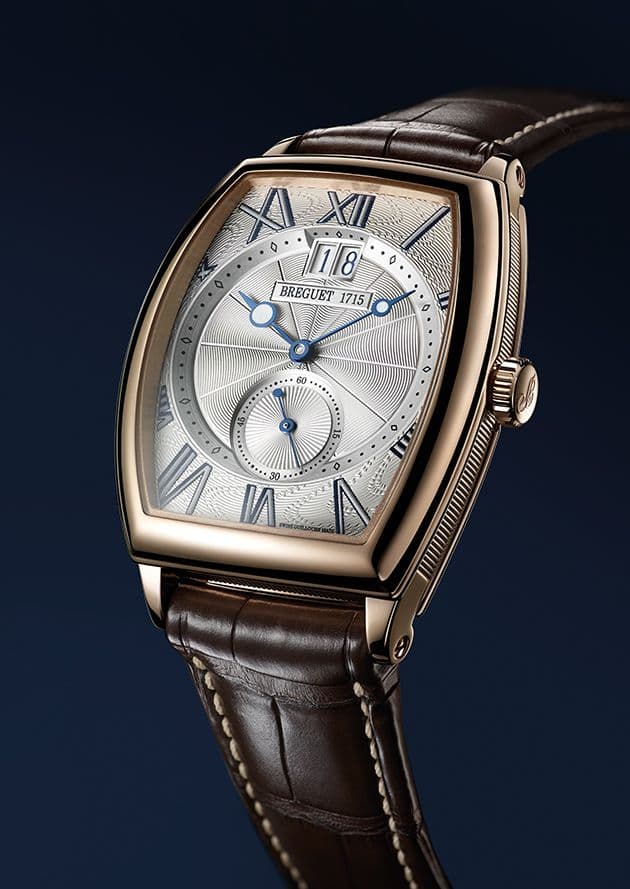
Breguet’s Héritage Grande Date 5410 sporting multiple guilloche techniques on the dial
The Finish Line
Of course, there are many more procedures meant to elevate the polish and smoothness of movement parts, including supplementary smoothing on miscellaneous parts that are not subject to one of the treatments above (called brouillage), circular or linear graining to create a matte effect and so on and so forth.
The ones we did cover, however, give us a glimpse at one of the most refined aspects of watchmaking—one that turns mechanical components into stunning works of art, even if it is only the watchmaker himself who will ever see it. If the sight of a tourbillon or the chime of a minute repeater represents the ingenuity of watchmaking, then movement or dial finishing represents the commitment of the world’s best watchmakers to their art.
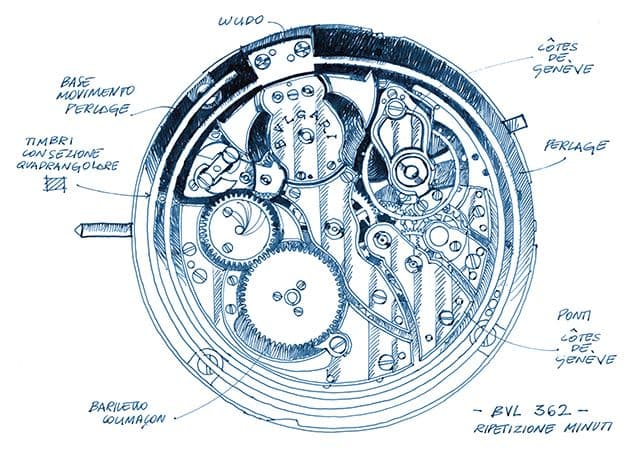
A sketch of Bulgari Octo Finissimo Minute Repeater’s movement with notes on the finishing techniques used
This article first appeared on DA MAN Caliber 2016. Get the magazine here