


THE LUXURY OF TIME. Wristwatches have gone a long way from being a merely time-telling instrument to a luxury statement. Among fine watch houses responsible for such a progressive development is Cartier

Cartier Santos Watch (1916)
From celebrities to royal families, French jewelry and watch brand Cartier has successfully fostered a growing list of respectable clientele from the beginning. But little did people know that Cartier has come a long way back from the 1800s when a young, ambitious protégé set out to make a name for himself.
It was Louis-François Cartier who first established Cartier after taking over his master’s workshop in 1847 in Paris—he was only 28 at the time. Talented Louis-François had a penchant for extravagant jewelries, which suited the taste of wealthy clientele. It accelerated the business to a rapid growth until it was time to pass it on to his son, Alfred.
30 years after the brand’s inception, Alfred stretched that spell of success by expanding the portfolio into clock making. Global fame soon came along with the rise of Alfred’s three sons managing and expanding the business to other continents. Louis, Pierre and Jacques, each had their hand on Cartier since 1899, and together they firmly established the brand identity of Cartier as we know it today.

Alberto Santos-Dumont ready to fly
THE BEGINNING OF MEN’S WRISTWATCHES
Prompted by the fussing of friend and Brazilian aviator Alberto Santos-Dumont on the impracticality of pocket watches while flying, Louis went experimenting with watch designs. He invented a distinctive square bezel and a leather strap exclusively for Santos-Dumont to wear on the wrist. That was how the Santos watch was born in 1904, and the design quickly took the world by storm and became the standard of men’s wristwatches.
In less than five years after the Santos was launched, the snowball of success was rolling fast. A contract with Edmund Jaeger to exclusively supply the movements for Cartier was signed, and the brand opened branches in London, New York and St. Petersburg with its headquarter in Paris. Soon enough, it became one of the most talked-about watch brands in the world with the birth of iconic men’s watch collections. The Tonneau was launched in 1906, while the Tortue and the Baignoire was first introduced in 1912 and Tank in 1919—the latter was created by Louis Cartier after seeing tanks during the World War I. The Pasha collection—designed on the request of Pasha of Marrakech—was launched in 1932. All of the models are still available across the world today.
“In 1984, Perrin founded The Cartier Foundation of Contemporary Art that smartly elevated the high-end jewelries and watches through many major exhibitions”
MORE THAN A FAMILY AFFAIR
In 1942, Louis Cartier passed away and Pierre subsequently ran the business until he passed away in 1964. Not long after, the fourth-generation of the Cartier family decided it was time for a drastic change. Jean-Jacques Cartier (Jacques’ son), Claude Cartier (Louis’ son) and Marionne Claudelle (Pierre’s daughter) signed an agreement to sell the business.
That decision turned Cartier from a family business to a worldwide company. In 1972, a group of investors bought the license of Cartier Paris and put Robert Hocq as the president and Alain Dominique Perrin as the general director. The duo did not waste time in producing new lines with a catch phrase, “Le must de Cartier,” which means “Cartier, it’s a must!”
The brand then moved forward to the 1980s with more or less 100 new collections, experimenting with steel, gold and the combination of both to meet the latest fashion trend. The new Santos collection using these materials was created in 1978, while 1983 witnessed the birth of Panthère jewelry for women and 1985 the new line of Pasha watches.

Cartier’s watch manufacture in La Chaux-de-Fonds
THE ART CONNECTION
Cartier rapidly grew to more than just fashionable luxuries—it has become a piece of art. In 1984, Perrin founded The Cartier Foundation of Contemporary Art that exhibits Cartier’s bedazzling collections. It smartly elevated the high-end jewelries and watches through many major exhibitions, first at The Musee du Petit Palais in 1989/1990, second at Hermitage Museum in St. Petersburg in 1992 and many more.
As fate would have it, 48 years after the family letting the brand go, the French luxury house Cartier was finally back under the arms of the Cartier family. Elle Pagels, the granddaughter of Pierre Cartier, bought the brand together with the Rupert family of Richemont.
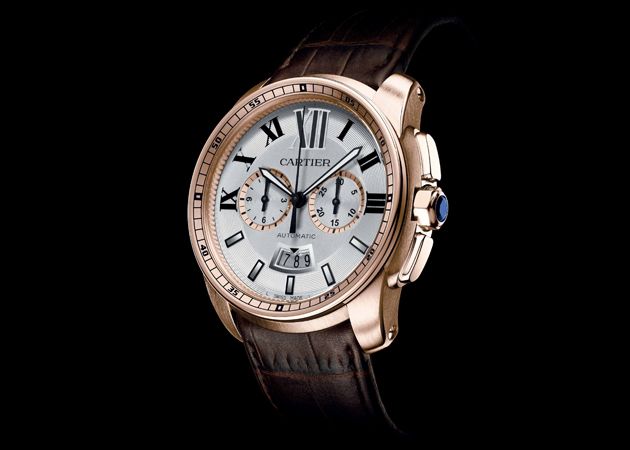
Calibre de Cartier Chronograph Automatic
A NEW BREAKTHROUGH
After years famously known for its grand design, Cartier is now bringing something new to the table. In 2010, the company took a huge step by creating a Calibre de Cartier series, which marked the first collection to use Cartier’s in-house movement. The new line powered by a 1904 MC movement is shooting for sports market, dedicated to men who understand the importance of high-end design and mechanical movements.
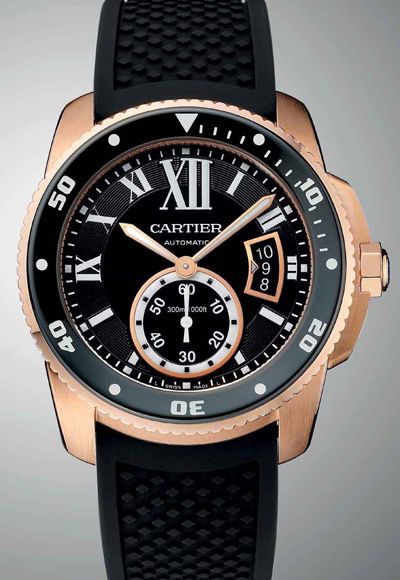
Calibre de Cartier Diver watch in pink gold
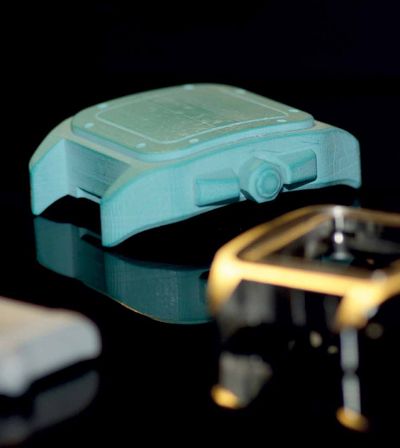
Making the Santos watch case
“As fate would have it, 48 years after the family letting the brand go, the French luxury house Cartier was finally back under the arms of the Cartier family”
Twelve models of Cartier de Calibre have been launched ever since, including the Calibre de Cartier Chronograph. But one of the most striking designs that attract the watch industry is the latest Calibre de Cartier Diver, most suitable for stylish adrenaline seekers. With rubber strap or bracelet, Calibre de Cartier Diver can accompany one diving down to 300 meters and is equipped with shock and chemical resistance, visibility even in complete darkness and more. And being Cartier, Calibre de Cartier Diver complies with the demands of the fashion industry by offering a very slim profile that fits a suit-and-tie pairing.
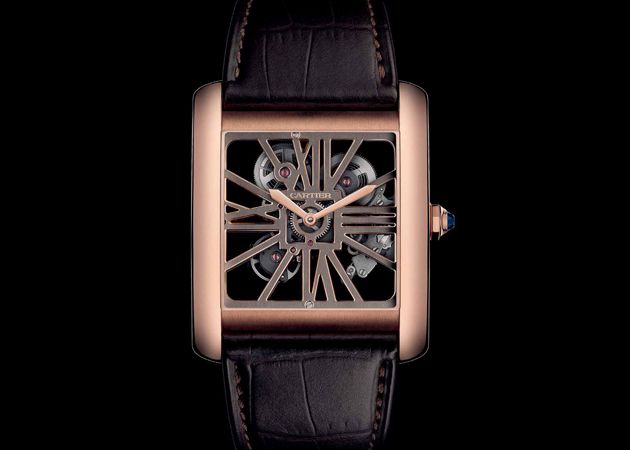
Tank MC Two-Tone Skeleton
As the brand is gearing up for the SIHH 2015 in Geneva, it is pretty amazing to recount how Cartier, a 167-year-old brand, hasn’t lost its touch of elegance and flair after all this time. The forward-thinking masterpieces such as the likes of Calibre de Cartier prove the versatility of craftsmanship to incorporate modern technology that complements the luxurious style of modern ladies and gentlemen. From Paris to the world, Cartier has been and will always be a symbol of luxury for more centuries to come.
Text: Risty Nurraisa