


Inspired by hypercar design and Formula 1 timekeeping, the TAG Heuer Monaco Split-Seconds Air 1 pairs avant-garde construction with a technically complex split-seconds chronograph movement
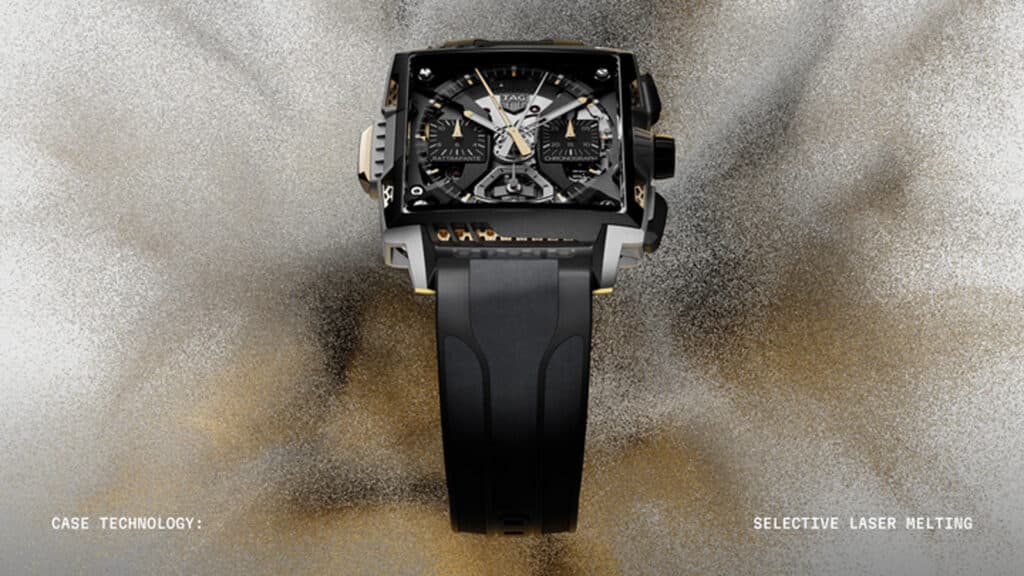
Unveiled at Dubai Watch Week, the TAG Heuer Monaco Split-Seconds Chronograph Air 1 signals a bold new chapter for one of the most recognizable silhouettes in modern watchmaking. The Monaco has always been a watch with attitude, forever tied to motorsport culture and the adrenaline of Formula 1. With the Split-Seconds Chronograph Air 1, TAG Heuer pushes that legacy further, presenting a machine engineered for speed, precision and contemporary performance.
At first glance, the watch appears almost aerodynamic—a piece shaped not merely for the wrist but for movement. The 41mm case is crafted from ultra-light Grade-5 titanium and brought to life using Selective Laser Melting (SLM), an advanced additive manufacturing process typically reserved for aerospace and high-performance automotive engineering. Instead of removing material, the case is built layer by layer, enabling forms that would be impossible or impractical using traditional machining. The result is a futuristic skeleton-like structure that feels closer to a hypercar chassis than a conventional watch case.
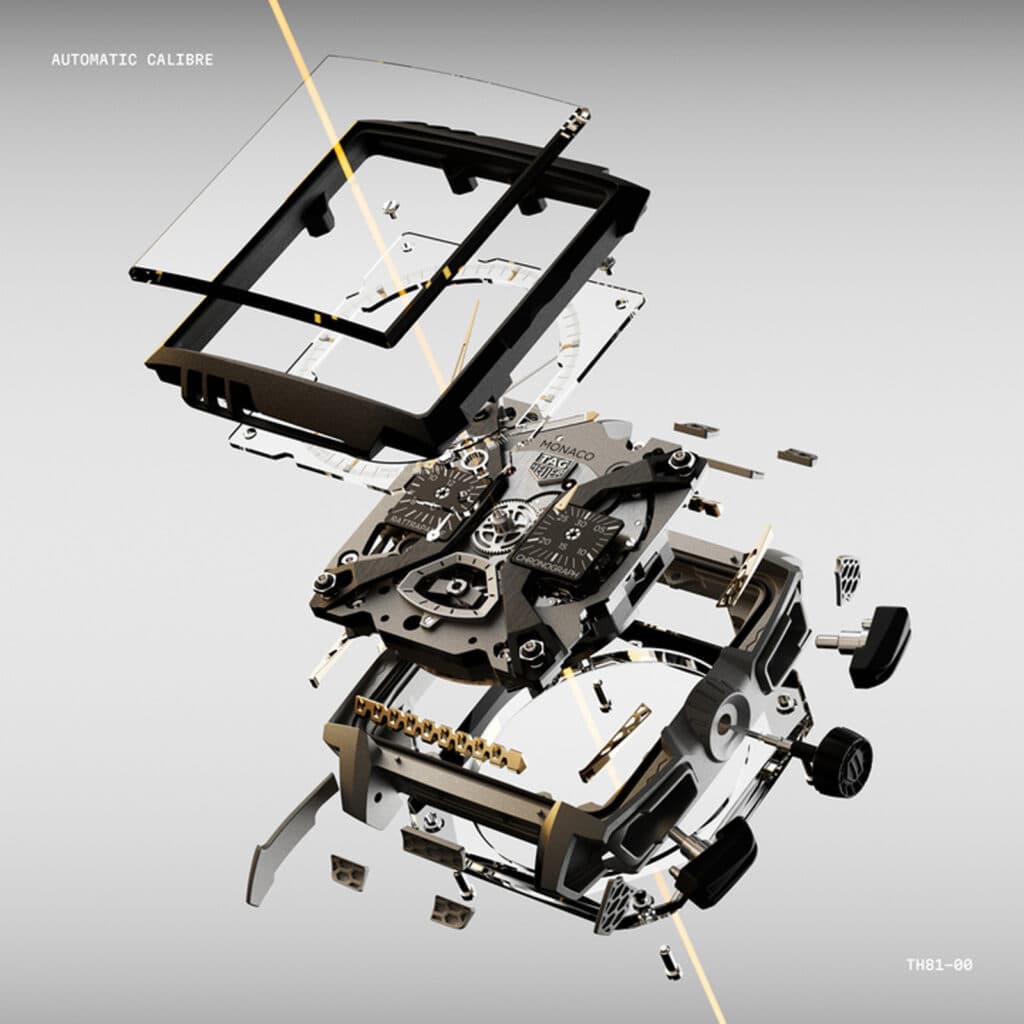
Weight plays an essential role in the design. Even with solid 2N yellow gold structural elements, the watch weighs only 85 grams. The gold components—visible within the lattice under the bezel and in the split-seconds pusher at 9 o’clock—create a striking contrast. It is an interplay of materials that reflects a modern definition of luxury: not ornament for its own sake but purposeful placement, confidence in engineering and a deliberate visual balance.
Through its sapphire dial, the movement becomes a core part of the aesthetic. Calibre TH81-00, developed in collaboration with Vaucher Manufacture Fleurier, is TAG Heuer’s most complex chronograph movement to date. The automatic calibre beats at 36,000 vibrations per hour, giving it the responsiveness expected from a watch grounded in racing timing heritage. Several components are crafted in Grade-5 titanium, reducing weight without compromising durability or consistency in extreme environments.
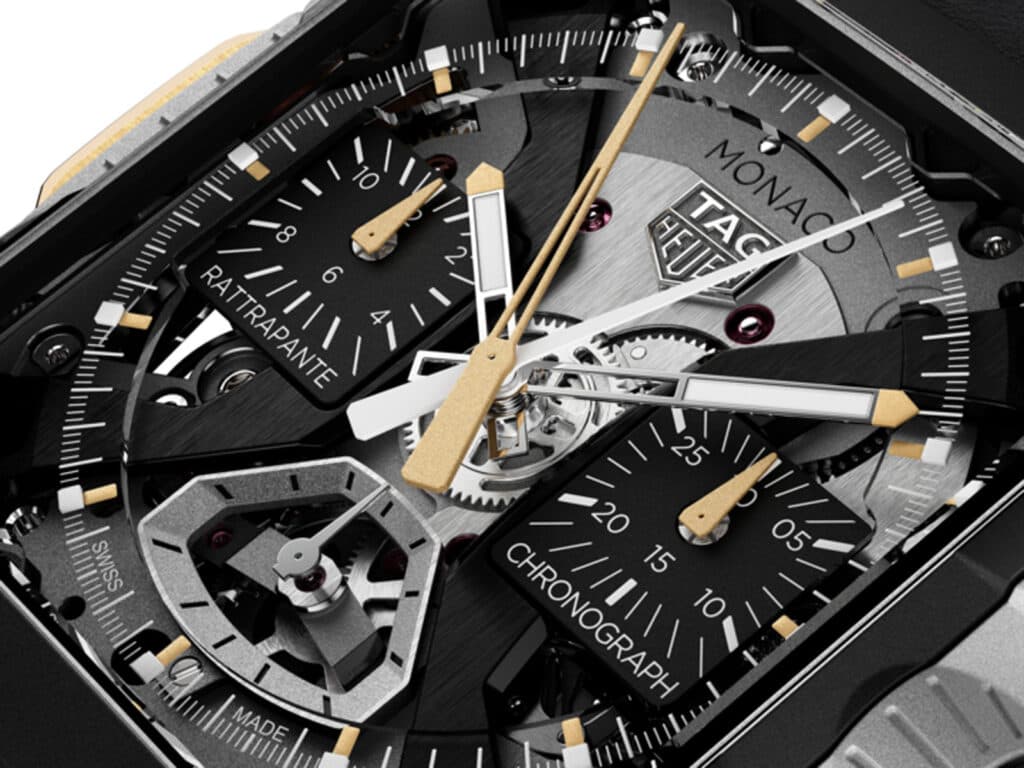
At the heart of the mechanical performance is the rattrapante, or split-seconds function. Initially created to time multiple racers or lap intervals, the complication allows two chronograph seconds hands to run together until one is stopped to record a split time. In motorsport terms, it is the difference between knowing the result and understanding how the race unfolded. For collectors, it remains one of mechanical watchmaking’s most respected challenges—a reminder that even in a watch defined by futuristic processes, classical horology remains essential.
The Monaco Split-Seconds Chronograph Air 1 also sits firmly within TAG Heuer’s racing legacy. From decades of Formula 1 timekeeping to its role as title partner of the Formula 1 Grand Prix de Monaco, the brand’s connection to the world of professional racing is long-standing and deeply embedded in the Monaco’s identity. The square case, famously introduced in 1969 as the first water-resistant square-cased automatic chronograph, became an emblem of technical innovation and design rebellion. The Air 1 continues that evolution—sharper, lighter and fueled by next-generation engineering.
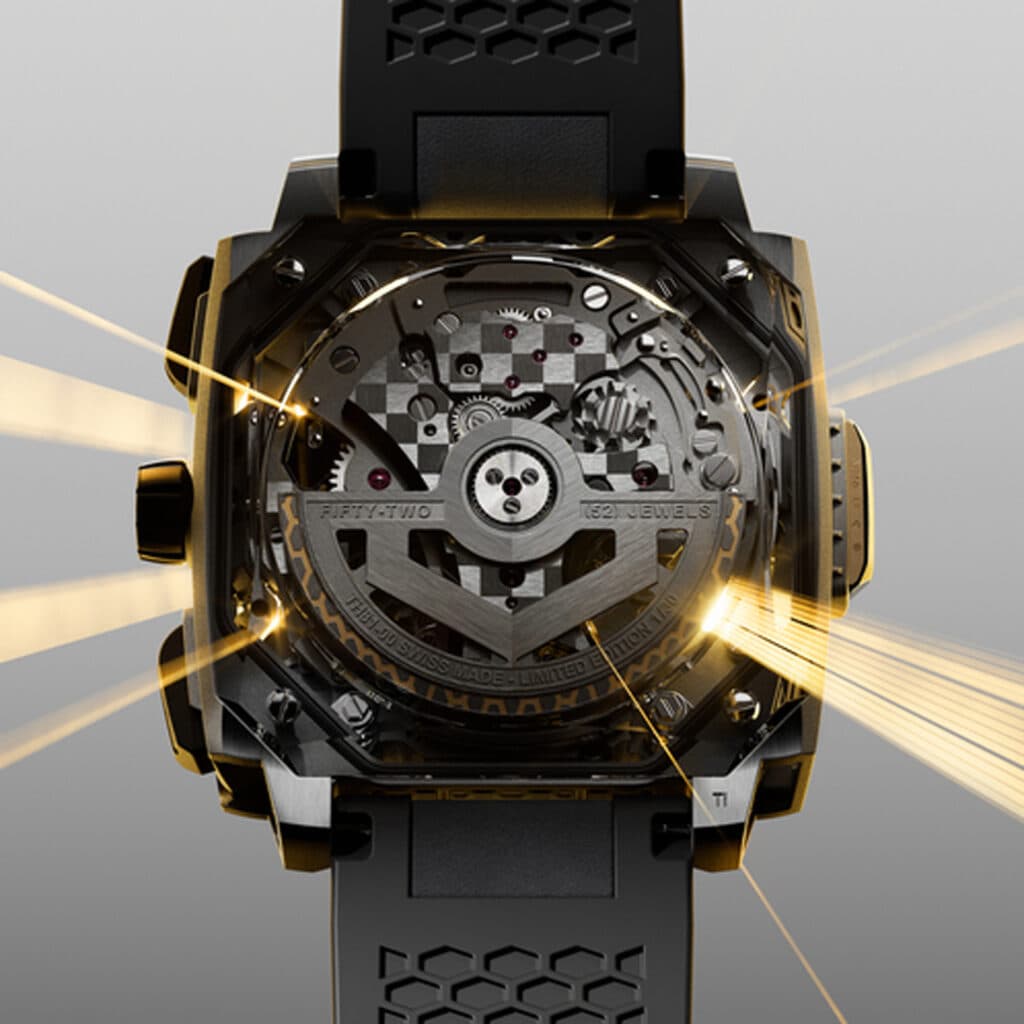
Only 30 pieces of the Monaco Split-Seconds Chronograph Air 1 will be produced, positioning it as a statement of innovation rather than a volume-driven release. Despite its technical complexity, it remains wearable. A black rubber strap with Alcantara inserts adds a sporty but refined finishing touch.
For watch enthusiasts, the Air 1 represents a milestone where material science, mechanical mastery and motorsport heritage intersect. For lifestyle readers, it stands as a reminder that innovation in watchmaking is not just about honoring the past but shaping what comes next.