


This is the story of how the Santos de Cartier revolutionized the way we interact with time, and ushered in a new era of practicality and sophistication.

Dubbed one of the most revolutionary pieces in the world of horology, the Santos de Cartier was born out of a friendship between two pioneers: Alberto Santos-Dumont, a famed Brazilian aviator, and Louis Cartier, a visionary jeweler. Santos-Dumont, who found it difficult to check his pocket watch while flying, expressed this concern to Cartier. Rising to the challenge, Cartier designed a solution that forever changed watchmaking: the first purpose-built wristwatch, named the Santos de Cartier.
The Trailblazer
It’s safe to say that the Santos de Cartier is more than a watch: it is a trailblazer in the history of timekeeping and design. Its creation marked a bold departure from convention, epitomizing Cartier’s mastery of form, minimalism, precision and attention to detail.
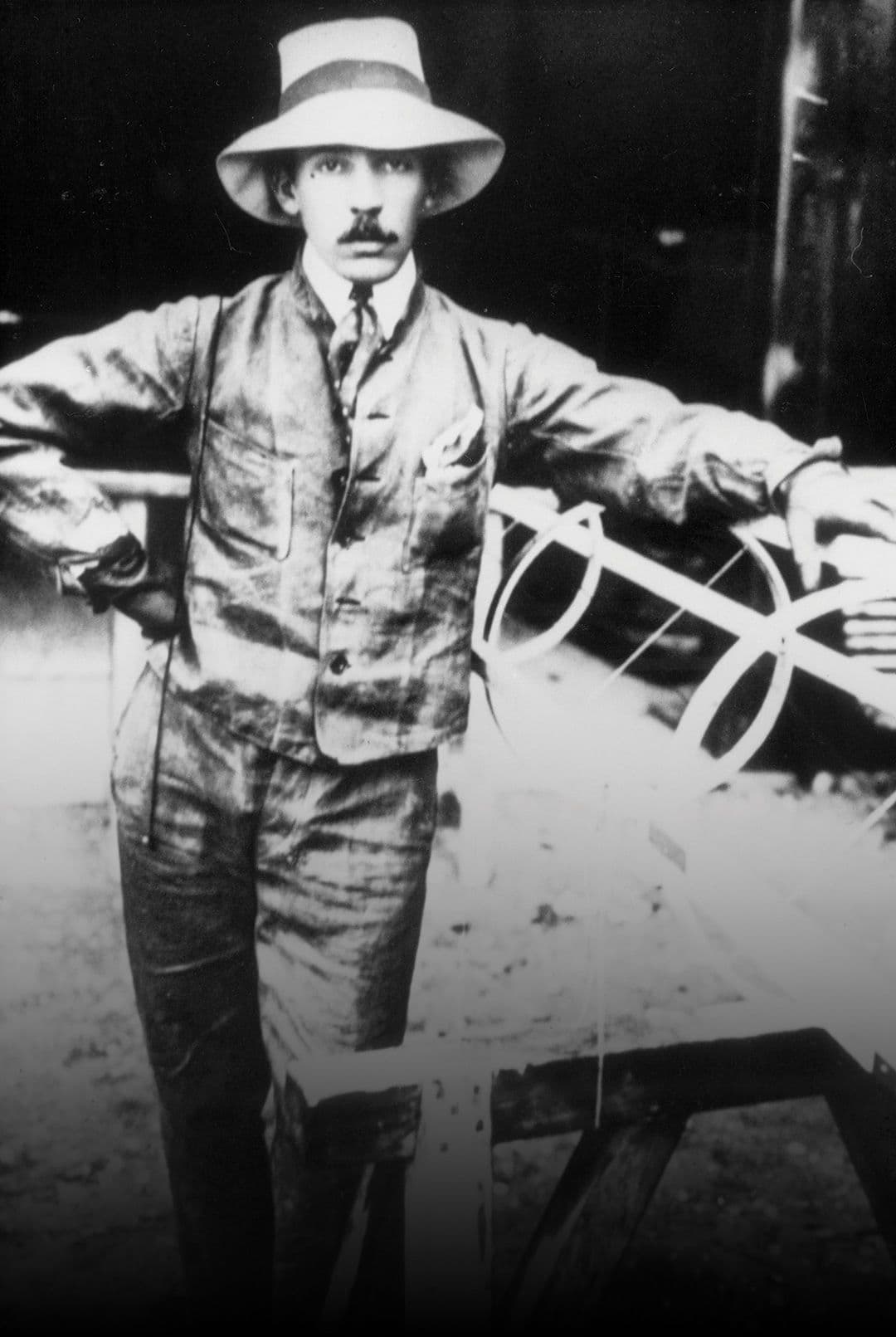
In 1904, when round watches dominated, the Santos broke the mold with its geometric precision and bold square case. Cartier’s artisans softened the edges with rounded corners and wide symmetrical bevels, creating a design that felt both structured and fluid. The visible rivets on the bezel, originally a functional necessity, were left intentionally exposed, becoming an iconic aesthetic feature. This daring choice showcased Cartier’s ability to blend practicality with artistry, turning an industrial element into a design signature.
The ergonomic design of the Santos watch really set it apart. It hugged the wrist, offering unparalleled comfort and practicality for its time. Its appeal was immediate, and when the Santos became commercially available in 1911, it captured the imagination of watch enthusiasts around the globe.
Evolution Through the Ages
Through the decades following its debut, the Santos de Cartier continued to evolve while staying true to its distinctive DNA. In 1978, Cartier introduced a bold new version featuring a bracelet made of gold and steel. This juxtaposition of materials was unprecedented and demonstrated Cartier’s willingness to innovate. The visible rivets on the bracelet echoed those on the case, creating a cohesive and harmonious design.

The 1987 Santos Galbée refined the watch even further, enhancing its curves and introducing a sleeker silhouette. By 2004, Cartier celebrated the watch’s centenary with the Santos 100, a larger and more robust iteration that combined modernity with tradition.
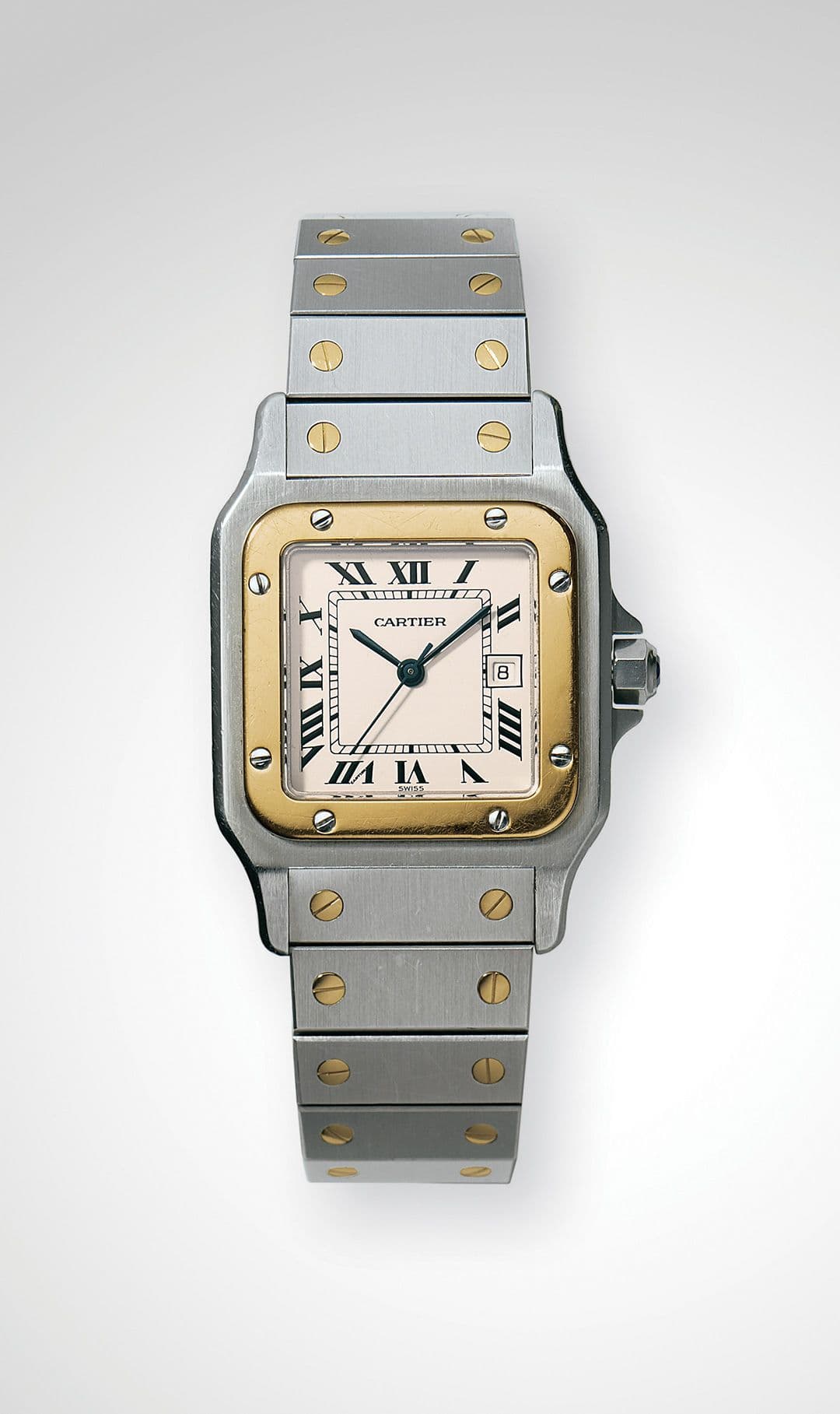
A New Era of Innovation
But the most significant redesign of the Santos de Cartier came in 2018, which brought the watch firmly into the 21st century. The updated model introduced two groundbreaking innovations: the QuickSwitch system and SmartLink technology. The QuickSwitch system allowed users to easily change between leather straps and metal bracelets, while SmartLink enabled tool-free adjustment of the bracelet length.
The watch’s 1847 MC movement, developed in-house by Cartier, ensures high performance and precision. It is resistant to magnetism up to 1,200 Gauss, is water-resistant up to 100 meters and offers accuracy that varies between -3 and +7 seconds per day. These advancements underline Cartier’s pursuit of technical excellence.
From its origins as a tool for an aviation pioneer to its current status as a symbol of luxury and style, the Santos de Cartier embodies the values of simplicity, practicality and elegance. Its timeless design and modern updates ensure that it remains a cherished icon in the world of watchmaking.
TEXT Anindya Devy