


P FOR PERFECTION. Although known for gracing the wrists of the world’s most influential people, the 175- year-old brand’s inception is far from it all
 Antoine Norbert de Patek
This story begins in 1833, in the aftermath of a failed uprising against the Russian occupation of Poland—the so-called November Revolution— that forced thousands of former freedom fighters to resettle in Switzerland. One such immigrant was Antoni Norbert Patek. In his new homeland, he tried his hand at various trades, from typesetting to painting, before finally finding what would eventually become his biggest legacy: trading in expensive pocket watches.
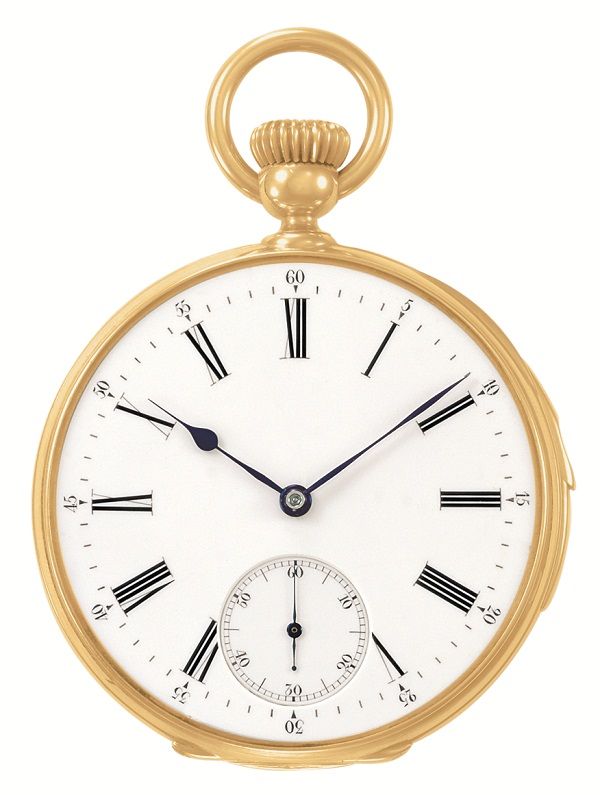
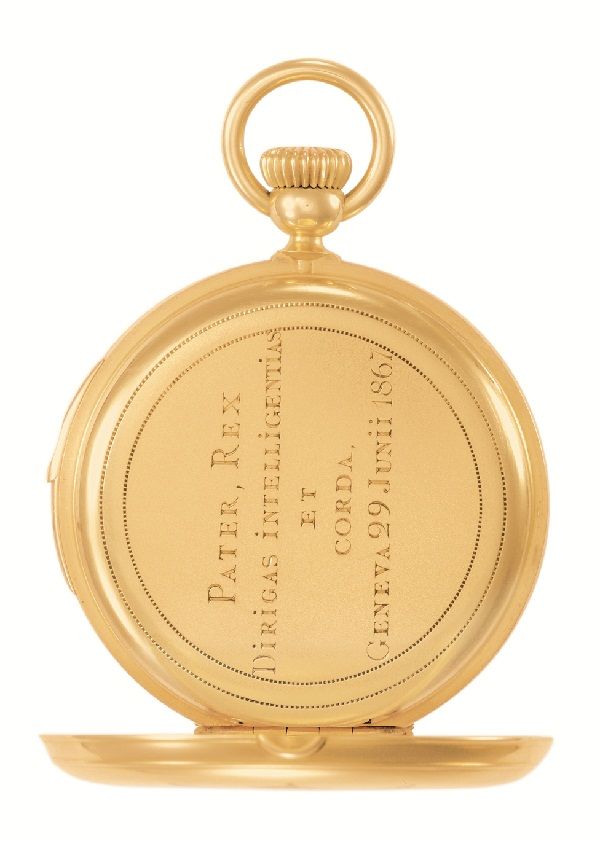
A Patek Philippe pocket watch owned by Pope Pius IX
In 1839, Antoni Patek and fellow Polish immigrant Franciszek Czapek established their very own watch manufacturing company: Patek, Czapek & Cie – Fabricants à Genève. Joining them was Thomas Moreau, the uncle of Patek’s wife, and three other Polish watchmakers, Wawrzyniec Gostkowski, Wincenty Gostkowski and Wladyslaw Bandurski. Czapek, who Gallicized his name into François Czapek, was already known as a gifted watchmaker in Warsaw, and the few remaining specimens produced by this venture spoke volumes of his artistry and technical expertise. Alas, this particular endeavor didn’t last, and in 1845 Patek and Czapek parted ways. While Czapek went on to establish his own company, Patek went on to find a new partner … one he met at French Industrial Exposition of 1844. This person was, perhaps not quite incidentally, the winner of the Gold Medal at that exhibition, for his invention of a mechanism that allowed watches to be wound and set by a crown rather than a key. This ingenious tinkerer was none other than Jean Adrien Philippe. It quickly became apparent that Antoni Patek’s business acumen and Jean Philippe’s technical ingenuity was a match made in heaven. Thus, in 1851, the newly formed Patek & Cie – Fabricants à Genève was renamed into Patek, Philippe & Cie.
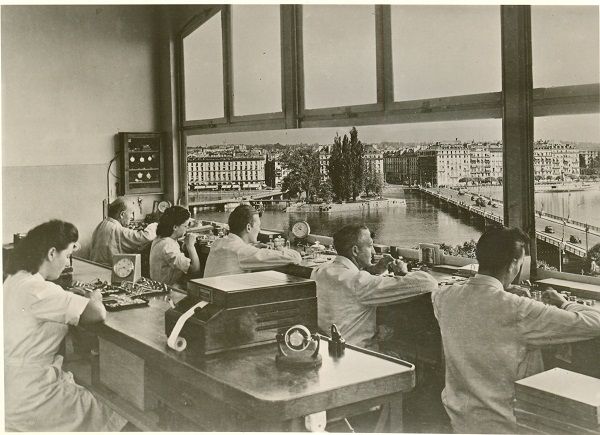

The Patek Philippe manufacture in the past; the brand’s headquarters in Geneva, Switzerland
The following years saw the fledgling company move forward in leaps and bounds. Jean Philippe would secure two more patents for the refinements he envisioned—refinements which are still in use today for the winding mechanisms of contemporary wristwatches. On the marketing front, Antoni Patek, now better known as Antoine Norbert de Patek, travelled around various European countries and the United States to introduce his company’s watches to the world. And the world did watch. Patek Philippe watches caught the eye of the British royal family (Queen Victoria acquired for herself a pendant watch No. 4719 along with a pocket watch No. 3218 for Prince Albert) and Pope Pius IX (who opted for a pocket watch No. 27.033—engraved with the Papal coat of arms).
“This story begins in 1833, in the aftermath of a failed uprising against the Russian occupation of Poland that forced thousands of former freedom fighters to resettle in Switzerland”
In 1877, Antoine Patek passed away. Amidst the hubbub of succession, his company still managed to make leaps and bounds forward, such as the completion of the duc de Regla, a grand complication pocket watch that plays the Westminster melody and comes with a minute repeater, in 1910, and the introduction of the first ever wrist chronograph, the No. 124.824, in 1923. Then, the Wall Street Crash of 1929 happened.
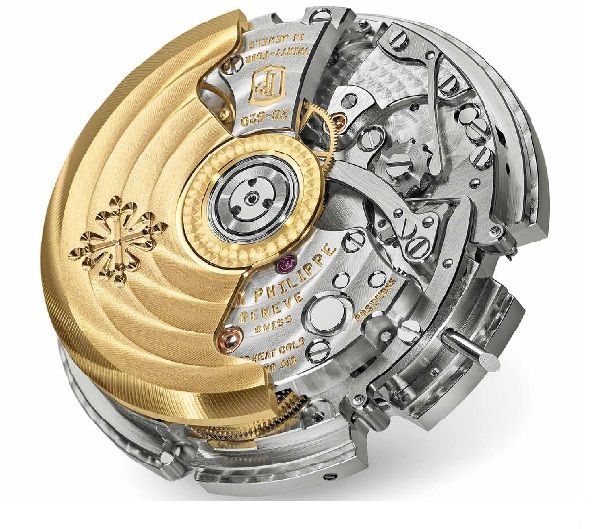
Patek Philippe is known for crafting the finest mechanical movements. The movement rotor usually bears an accent logo of Calatrava cross.
THE MARCH OF TIME
In what can only be described as a protracted global economic crisis, luxury brands tend to fall down hard and fast, even in the case of a storied name like the Ancienne Manufacture d’horlogerie Patek, Philippe & Cie SA. Luckily, the company found co-proprietors—and eventually new owners—in brothers Charles and Jean Stern, owners of Cadrans Stern Frères, a dial-making business who already had an amicable business relationship with the watch manufacturer. Even back then, mergers and acquisitions often heralded the death of a company’s founding ideals. Yet the Stern brothers wisely and graciously decided against immediately taking over the helm of Patek Philippe. The position of chief executive was instead handed to a horological expert, Jean Pfister. It was only in 1934 that a member of the family, Charles Stern, was appointed as chairman of the board of directors. With fresh capital, as well as a new management philosophy, Patek Philippe bounced back. Actually, it bounced back even before then. In 1932, the company launched Ref. 96, a prototype for a line of dress watches that would become the brand’s flagship model: the Calatrava. The years that followed and up to this year is perhaps best described as a steady march forward, punctuated by new innovations (the company currently has an impressive repertoire of more than 80 registered patents) and a stream of new masterpieces carrying the Patek Philippe seal. It remains one of the world’s last family-owned, independent watch manufacturers in Geneva, which enjoys total creative freedom to create and innovate yet never going astray from its legacy.
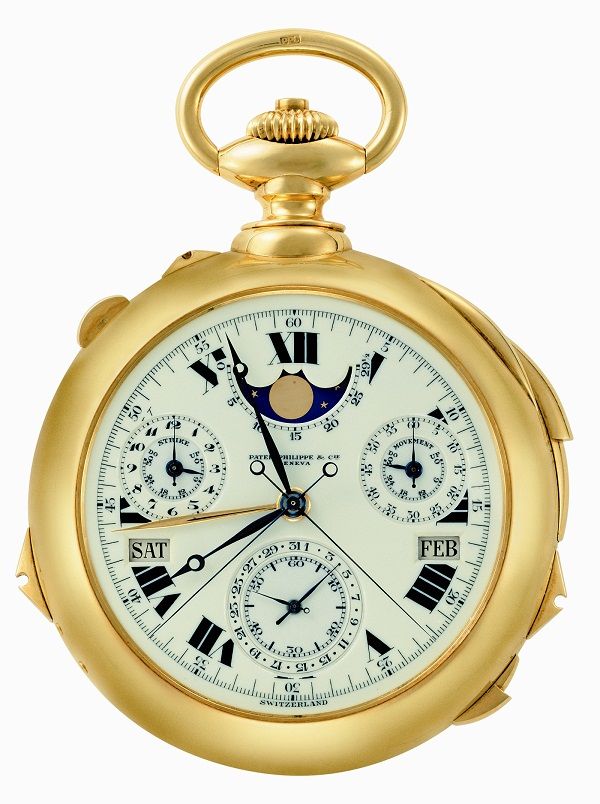

Patek Philippe Henry Graves Supercomplication no.198.385 (1933); Thierry Stern
“Patek Philippe watches caught the eye of Pope Pius IX who opted for a pocket watch No. 27.033, engraved with the Papal coat of arms”
KEEPERS OF TIME AND LEGACY
The history of a great company can only tell one part of the tale; its wares and products have to speak for themselves. In its storied 175 years, Patek Philippe has given birth to quite a few pieces that speak volumes. Take, for example, Patek Philippe No. 198.385. Known as the Henry Graves Supercomplication, this ultra-complicated pocket watch was sold in 1933 to the eponymous banker, who was a longtime purveyor of Patek Philippe watches. It was, actually, commissioned by Mr. Graves to compete with “The Packard,” an astronomical pocket watch (No. 198.023) ordered by automobile manufacturer James Ward Packard—his “horological competitor.” The Supercomplication was sold off in auction in 1999 for an unprecedented US$11 million, a record which remains unbroken. This tradition for mechanical uniqueness continues well into the late of 20th century, with the launch of the Calibre 89 in 1989 as Patek Philippe celebrates its 150th anniversary. Only four of these masterpieces were created, each with 33 complications, which is yet another unbroken record held by the company. And of course there’s also one of the latest Patek Phillipe creations: this year’s Nautilus Travel Time Chronograph Ref 5990/1A, part of the now iconic Nautilus collection. All of complications found on this timepiece can already be found in a number of other Patek Phillipe watches, yet having them all in one package is a first, and it necessitated the creation of a new caliber movement. What made all this possible is an ingenious device that dates back to a patent granted to the company back in 1959.
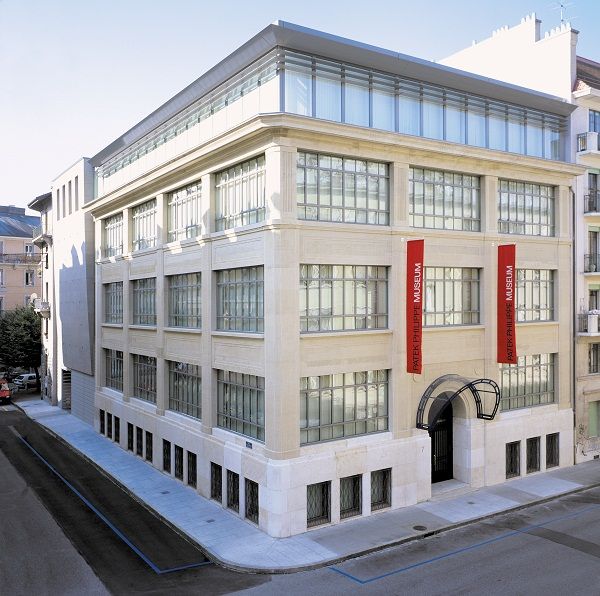
Patek Philippe Museum at Rue Des Vieuxgrenadiers 7, Geneva
And that pretty much sums up what Patek Philippe is all about: innovation and tradition, in one exclusive package. If you are intrigued to see the illustrious history in one go, make sure that you book a ticket for the brand’s major exhibition at the world-famous Saatchi Gallery in London, taking place from May 27 to June 7, 2015, which will showcase not only extraordinary timepieces but also rare pocket watches of the past.
FIVE FACTS
- Patek Philippe’s flagship store has occupied the same Lakefront, six-storied building since 1845.
- Patek Philippe’s employees do not get a discount when purchasing their own watches, since such promotion would only “dilute” the brand.
- Russian president, Vladimir Putin has a Patek Phillippe perpetual calendar and a Patek Phillippe Calatrava worth $60,000 and $18,000, respectively.
- Ryan Gosling’s character in the 2011 movie “Drive” was prominently shown owning a Patek Phillipe watch.
- Patek Philippe produces only 20,000 watches a year. As a comparison, another famous swiss watch brand rolls out 800,000 watches a year in average.