


BEYOND THE TONKINESE ALPS. Explore some of Vietnam’s best-kept secrets to find out just why this is such a popular and exotic destination
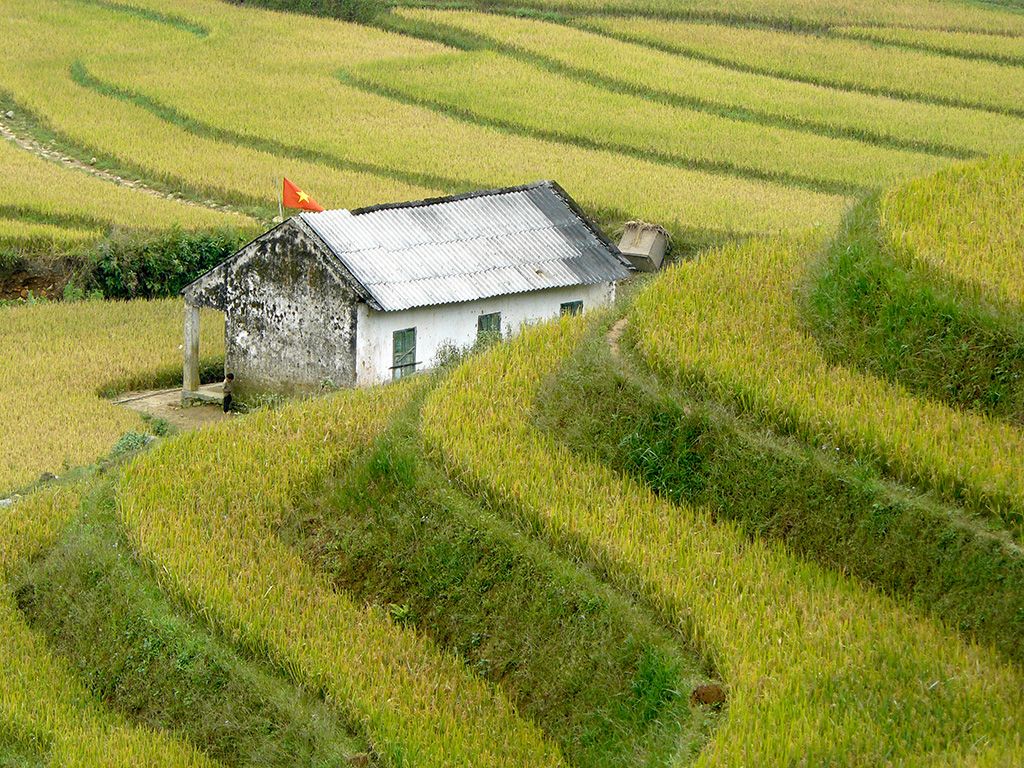
A small farmhouse in a rice field near Sapa
We screech to a halt just shy of a herd of buffalo. We’d been tearing around the corner in a way only these well-trained drivers know how—with complete disregard for speed, safety or oncoming traffic. And so, perhaps in fright or anger, a large buffalo decided to relieve himself with a stream of urine flooding the tarmac directly in front of us. I pity the motorbikes behind us who copped the full brunt.
I’m making my way into Vietnam’s far north, to the town of Sapa. This quaint village is nestled, at an elevation of 1,600 meters, in the Tonkinese Alps. Sapa was first built as a hill station in 1922, but several wars, including WWII and the Guerrilla War with the French, and many other border skirmishes with China, along with economic problems have prevented it from developing until fairly recently. Of course, this is largely true of the nation as a whole. Vietnam’s economy began to really grow in 1995, shortly after the government in Hanoi restored economic and political ties with the United States.
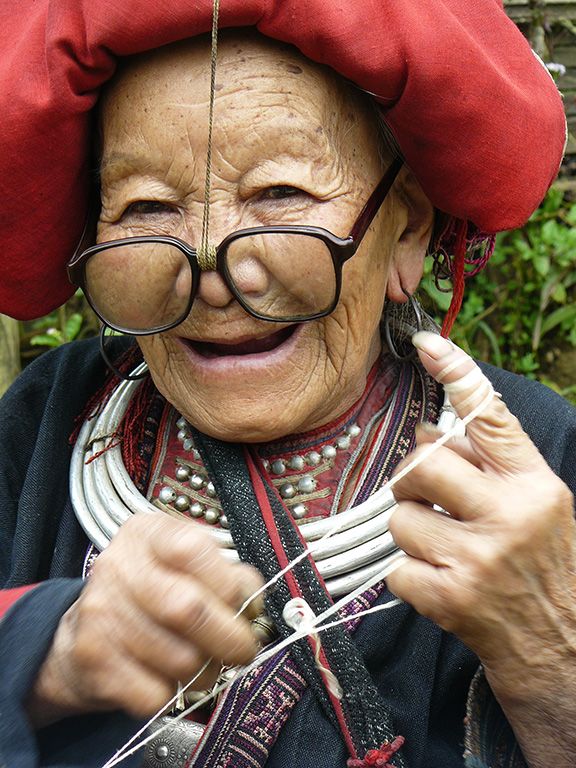
An elderly woman makes handicrafts for tourists in a Hmong minority village outside Sapa
The views on the way to Sapa are an endless canvas of stunning green paddy fields, villages protruding from terraced hillsides and water buffalo working steadily in the fields. It’s Indochina at its clichéd best. A few moments later, we come across a group of Hmong women flagging us down for a ride. They were wearing matching blue robes, with bright red scarves wrapped around their heads and earrings seemingly the size of a basketball hoop. They were also carrying huge bags of cooked rice that were heaved inside the already cramped van.
It’s my first encounter with Sapa’s Montagnard people, and as we progressed on the uneven road, the more intimate the quarters became. We stop intermittently as more bags of rice were tossed into the van. But the last few winding kilometers were much cooler, so the press of the hot bodies omitting a strong garlic aroma was semi-bearable.
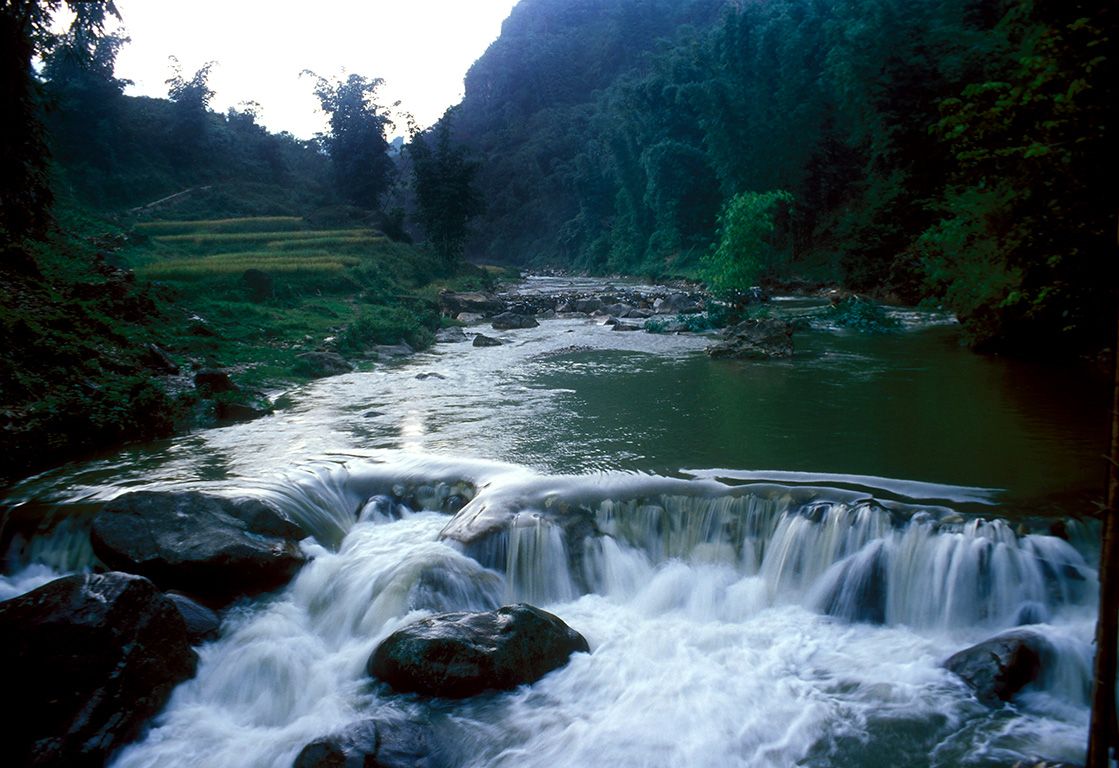
A picturesque river below Cat Cat village
Today, Vietnam and Sapa have been completely “discovered” and most places are well-trodden tourist destinations. While you may have to share the location with others, it also means services are largely efficient and are still very affordable. There are plenty of comfortable guesthouses and hotels to stay at, and hot water showers, air-conditioning, Internet and restaurants abound. Additionally, many people speak English, making communication convenient.
Sapa is popular with Vietnamese and foreign residents, who journey from the capital Hanoi on weekends. It’s also popular with foreign travelers journeying through Southeast Asia. This is partly due to its proximity to Hanoi—a short overnight train ride away. Mostly, though, it’s due to the attractions that include colorful minority groups in the nearby hills, fabulous local markets to purchase a number of interesting souvenirs, serene landscapes to indulge in, and a variety of trekking and biking opportunities.
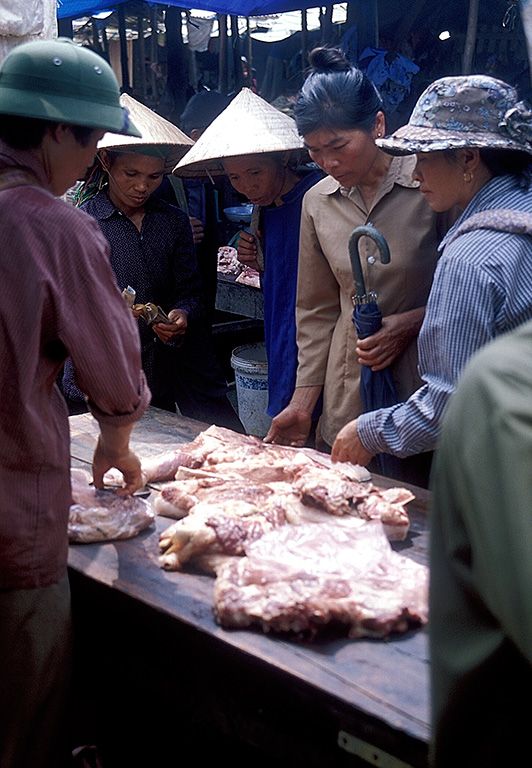
A meat market at Bac Ha village
“Sapa is just one of a number of locations easily accessible from Hanoi”
One of the best ways to become acquainted with Sapa is via the Saturday market, when the hill tribes come to hawk their wares and meet up with friends, although smaller markets are held every other day during the week. The largest ethnic groups are the Hmong and Dzao people, and most are quite accustomed to tourists, but you should ask permission to take photographs. Some will try to sell you souvenirs, though most are there to simply enjoy the market and have some fun.
I spent the better part of the morning in the market wandering past squawking chickens, toppling stacks of sandals, crispy vegetables and snakes bottled in their juices—apparently they have medicinal values and serve as an aphrodisiac. It’s safe to say this writer passed on the bottled serpent delight.
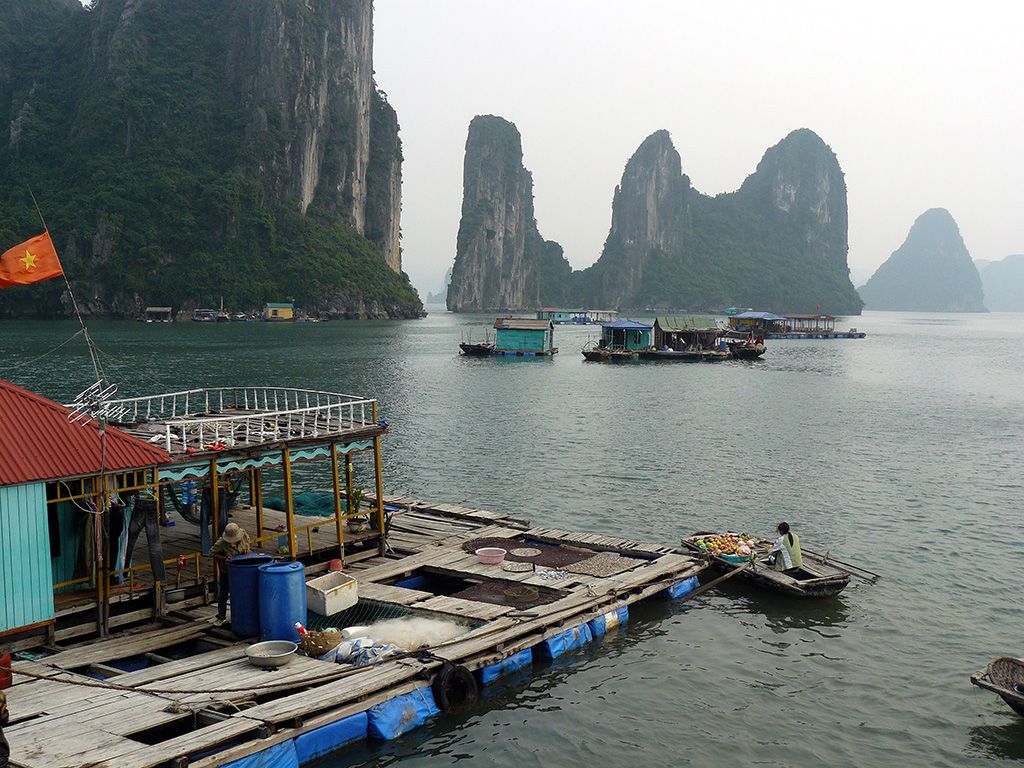
The beautiful limestone islets of Halong Bay
It was an appetite-intensifying trek among the narrow, steep streets so I headed into the market’s dark, cavernous food hall for some Sapa-style nourishment consisting of soup and noodles, but again I passed on the snakes. It was apparent that few tourists ventured into these parts, but it was also one of the most economical meals you will find.
Another interesting, and larger, market is at Bac Ha on Sundays. Flower Hmong are the most populous ethnic group here and wear particularly bright, elaborate outfits. Most tourists wander through the handicraft sections looking for souvenirs, but I went straight to the food items again, where I knew the Hmong would be gathered. Beautifully clad women wandered amongst mounds of potatoes, tomatoes and cabbage while the men and boys gathered near the live animals. The bartering was particularly entertaining. For the most part, they involved heated debates about the price of a pig, chicken, goat, dog, horse or water buffalo. Once a price was decided, huge wads of dong (Vietnamese currency) were counted and handed over.
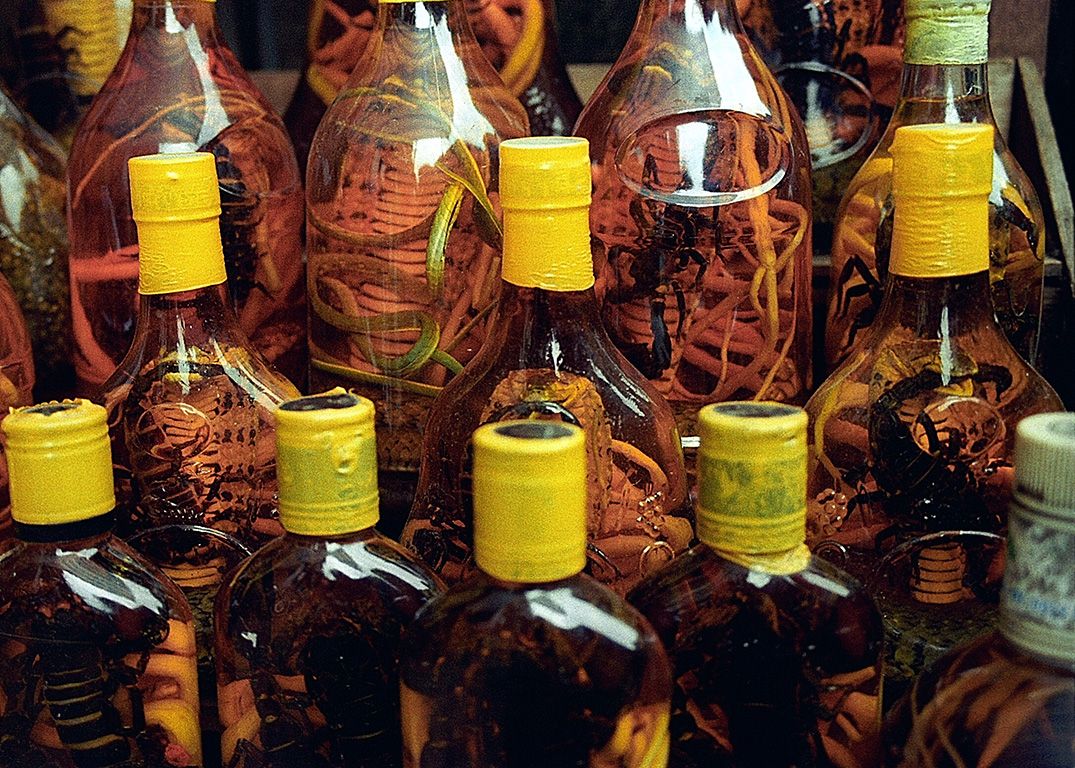
Snakes bottled in their juices at the Sapa market
Many tourists come for the weekend markets in and around this quiet mountain village, as it’s more than worth the journey. If you decide to stay through the week, and wait until the crowds subside, you’ll be treated to a quieter, more authentic experience.
One of the best activities to enjoy when the markets are not in full swing is lacing up your hiking boots and heading to the trails on nearby Mount Fansipan—the tallest mountain in Vietnam at 3,143 meters. It generally takes three to five days to reach the summit. It’s an endurance hike and the views are striking, but you don’t see many villages beyond the first day. For most tourists, it’s a little too much effort and many settle for the shorter trek that takes you through several villages and working fields.
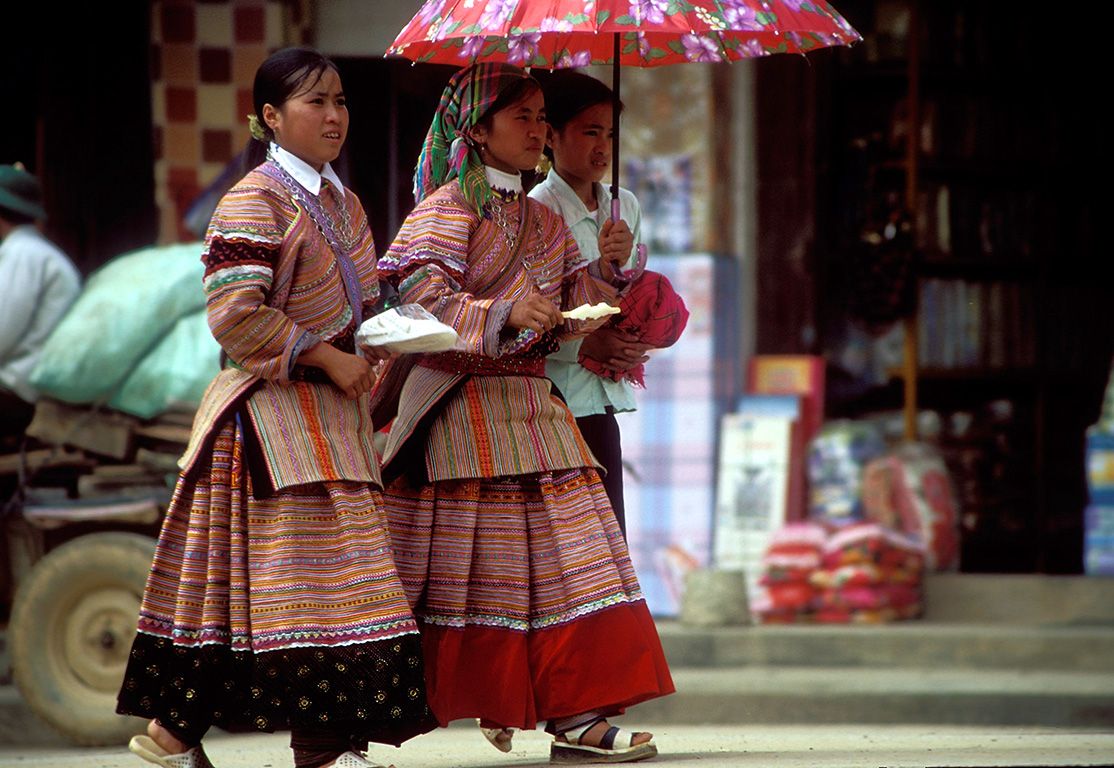
Flower Hmong at the colorful Sunday market in Bac Ha
All visitors must have a guide and a permit to enter the villages. Most day treks cost US$10 and can be booked in town. They generally visit three villages and most of them start in Cat Cat.
Cat Cat is one of the few villages where you won’t need a guide, but you still pay 10,000 dong (60 U.S. cents) for the entry fee. It’s a lovely two-hour circuit through fields, across rivers, into the village and back. I timed it for sunset, a perfect setting for the best views, fewest tourists and when locals return home from working in the fields.
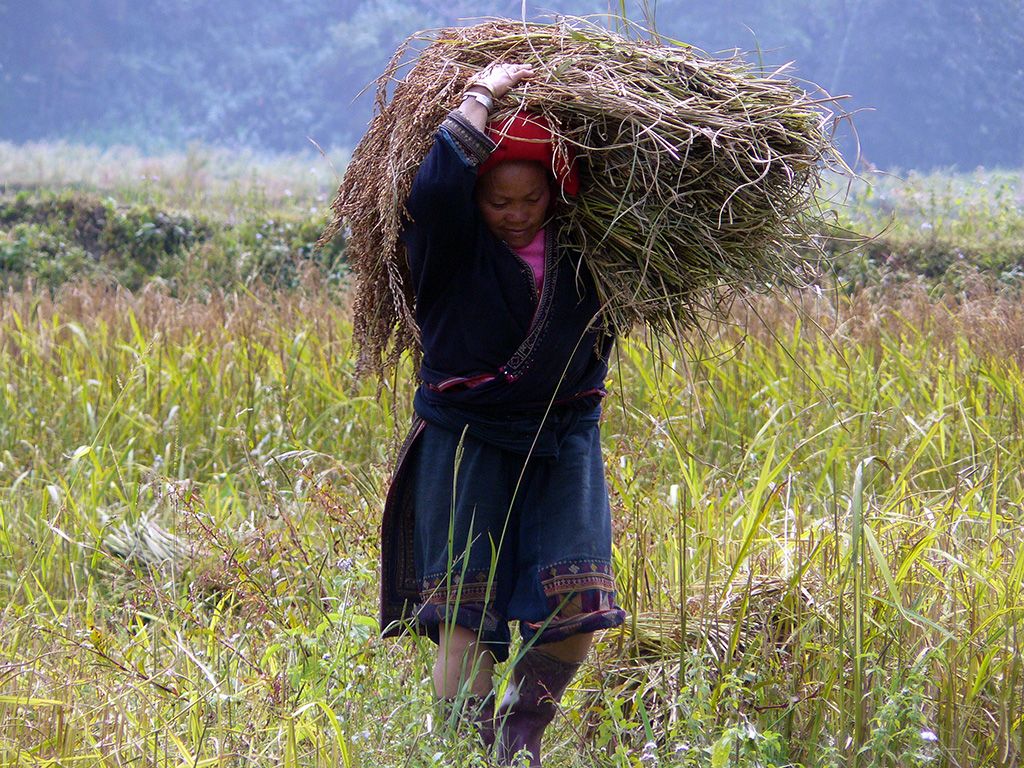
Hmong minority woman working the fields outside Sapa
Cat Cat is a traditional Hmong village and the wooden houses generally have three rooms with three doors. As I wound through the village, groups of friendly children greeted me and families invited me inside their homes; although it became clear they wanted me to purchase some handicrafts. However, it was a fair trade for a rare glimpse of ethnic home life.
Sapa is just one of a number of locations easily accessible from Hanoi. If you’re planning to head to Vietnam, you could base yourself in the capital city and take a number of short trips from there—just make sure you set plenty of time aside to visit Hanoi itself.
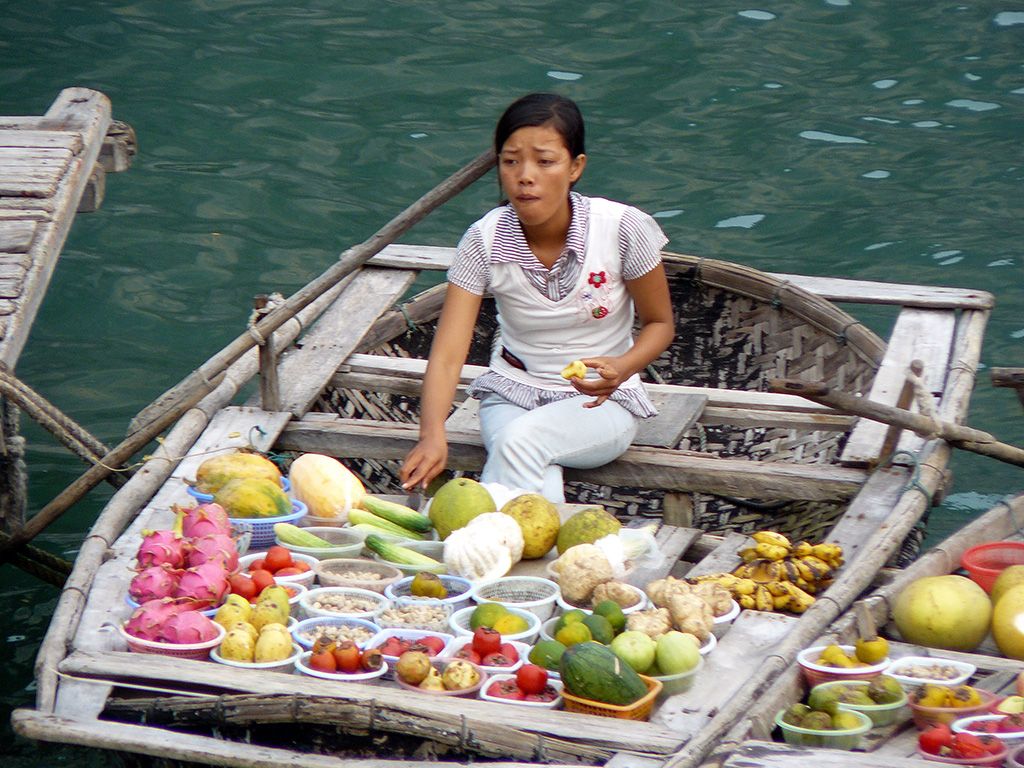
A young vender at the floating markets selling fruit and vegetables in Halong Bay
It’s a city in the French provincial tradition, a peaceful retreat with lakes, heady markets and cultural heritage, all of which makes it an attractive place to visit. It was also the capital of the communist North during the Vietnam War. Today, it’s a far more peace-loving place, although you can still pay respects to Ho Chi Minh in his mausoleum or visit the Stilt House where he lived.
Other things to do include catching a performance of Hanoi’s famed water puppets, visiting the peaceful garden retreat, the Temple of Literature, watching lovers strolling around Hoan Kiem Lake, joining worshipers at any number of stunning pagodas and shrines or sampling Hanoi’s culinary delights.
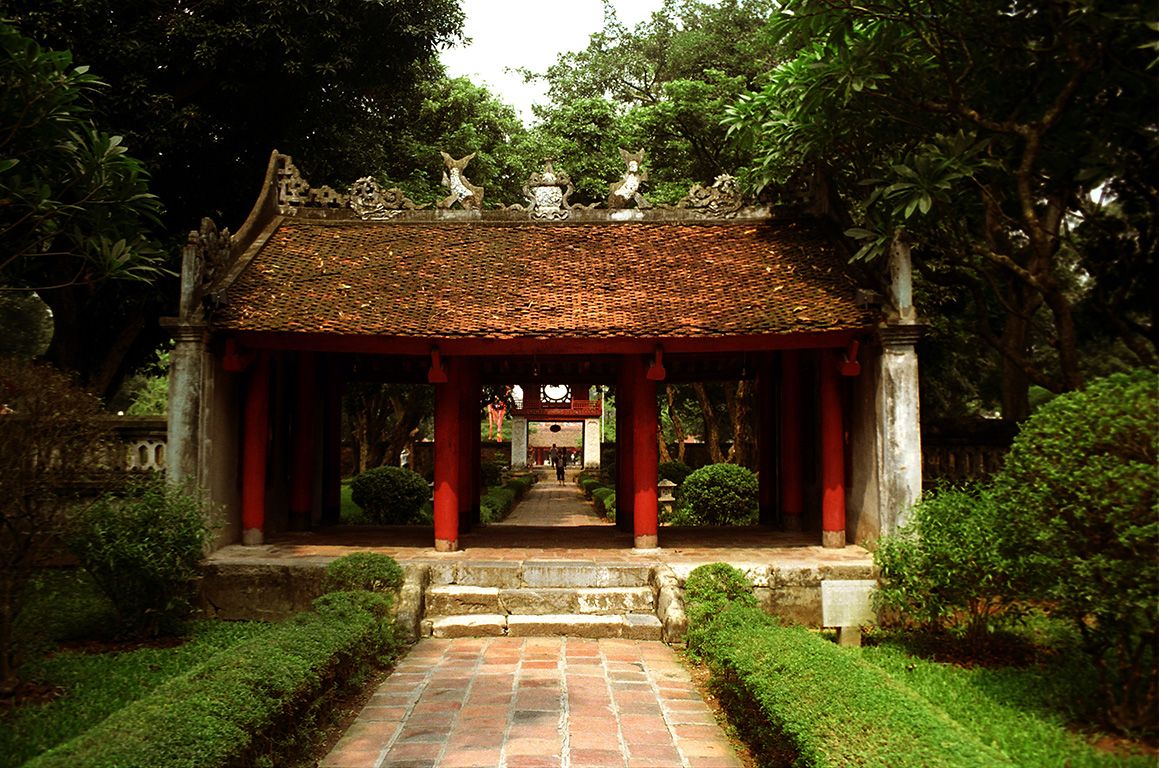
The Temple of Literature, Hanoi
In Vietnam, it is said people learn to eat before they speak. They certainly learn to eat pho (noodles) in enormous quantities. My favorite breakfast routine here was to pull up a plastic stool in street-side cafés with hundreds of locals to dive into steaming bowls of pho bo (beef noodle soup) or pho ga (chicken soup with rice noodles).
Most nights took me to busy crossroads in the Old Quarter where you could buy beer on tap for 2,000 dong (12 U.S. cents). All manner of life passes by these streets including police who fine shopkeepers for patrons sitting on the street, so we were constantly jumping out of our seats and shuffling to the curb until they went past. The highlight of Hanoi is undoubtedly the historic and motorbike-seething chaos of the Old Quarter. The narrow streets of this district were where Hanoi’s 36 guilds once established themselves. Today, the streets still carry the names of the guilds, although they do not necessarily sell the same produce.
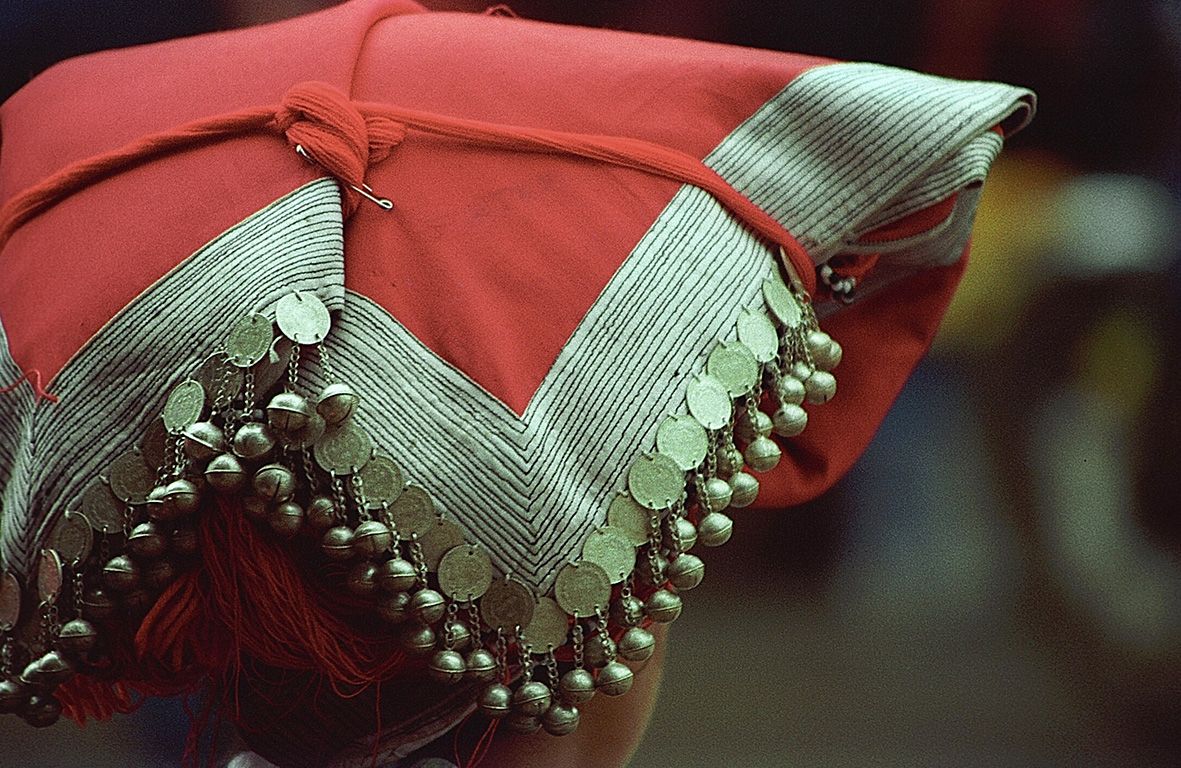
A vilager wearing a traditional headdress with intricate details
However, you can still find Silk Street selling what its name implies. On top of selling silk, there are vendors peddling embroidery, lacquer-ware and paintings. There are numerous street systems with several other streets that are dedicated to entire production outlets such as flowers, electronics and shoemaking.
The best way to explore this area is on foot, which requires careful negotiation of the busy streets. I soon perfected a motion whereby I moved slowly into the traffic and across the street with cars, bicycles, rickshaws and scooters moving around me on all sides. The Old Quarter is also a fun place to stay as comfortable budget hotels abound.
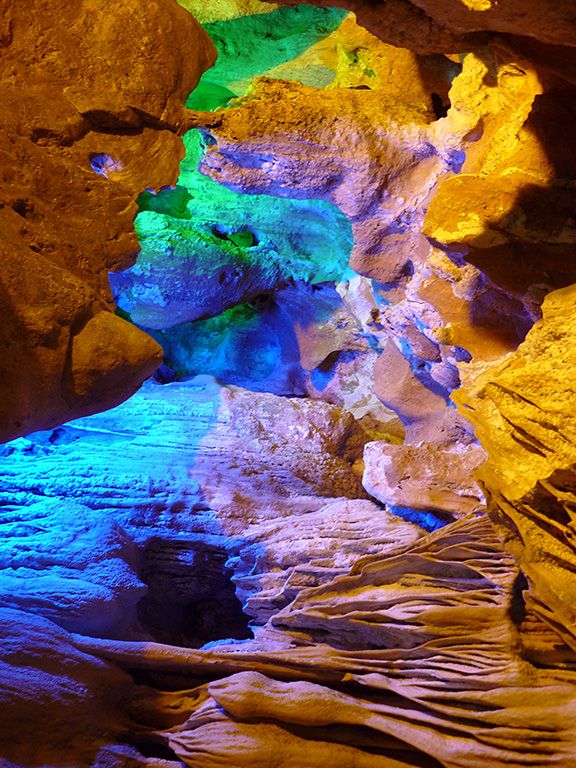
Colorful caves in Halong Bay
Once you’re ready to explore outside the city again, consider traveling northeast to the gorgeous UNESCO World Heritage site of Halong Bay. It’s the leading tourist attraction for good reason. More than 3,000 limestone islets rise from the clear waters of the Gulf of Tonkin and are dotted with beaches and grottoes. It is truly a natural marvel. The best way to appreciate the bay is to take a tour offered from Hanoi, which combines all your transfers, food and accommodation. You simply choose your level of tour comfort then sit back and enjoy the ride.
Once you are bussed to Halong, most of the remaining travel is by boat. I took a two-night sojourn with the first night onboard. It was glorious sipping beers on the deck, dining on fresh seafood at night, waking to views of the islets and diving into the evergreen waters before breakfast in the morning.

Remnants of the Vietnam War marks an abandoned tank in the demilitarized zone
The second day was spent on Cat Ba Island and included sea kayaking and a chance to appreciate the beaches, villages and walks on the island. Another travel option from Hanoi is to journey south to the Demilitarized Zone, also known as the DMZ, where you can visit the historic war sites. You will need a guide to get you around and explain the highlights to get the most out of your visit. Tours can be arranged from Hanoi or Hue. Highlights of the DMZ include nearly three kilometers of tunnels from Vinh Moc, where you can scramble through the underground passageways, which contain underground homes, weapon-storage areas, kitchens and hospitals of the Viet Cong. You can also visit the Ben Hai River, which marks the 17th parallel—the dividing line between North and South during the war.
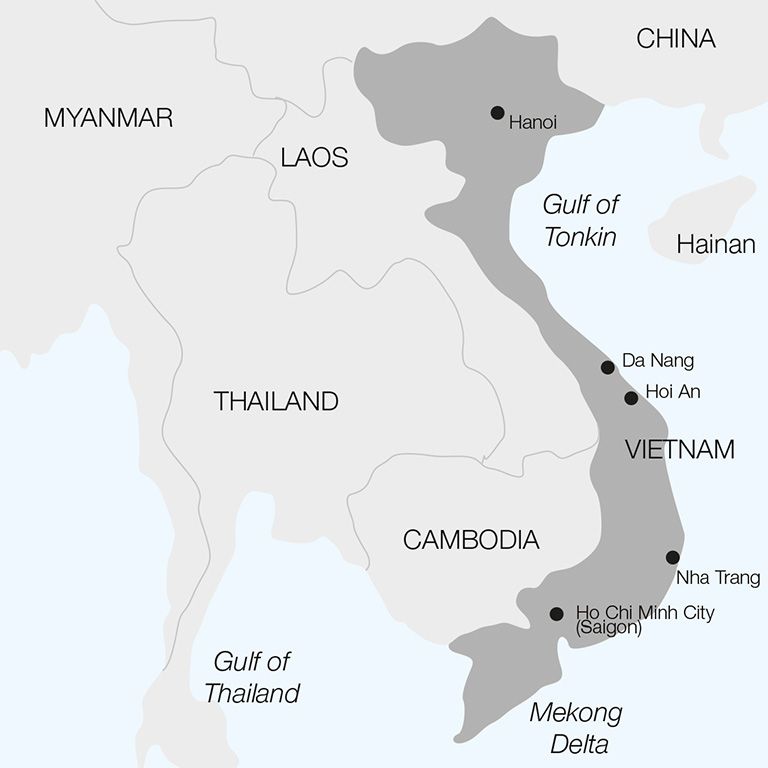
If this sparks your appetite for more history, you’ll want to check out the war sites of Ho Chi Minh City (née Saigon) to the south. It’s advised to take a stop at the charming riverside town of Hoi An and get some clothes tailored or take a cooking lesson. One can also relax by the beach in Nha Trang or hike and cycle in the cool hillside town of Dalat.
With such a wealth of sites to visit, from mountains to beaches and the memories of Vietnam’s more volatile past, you’ll find this little country will get under your skin in a good way. But this once war-ravaged country is most touching, not for its eccentricities and unusual cuisine, but for the warmth and friendliness of its people—after all, the people make the country.
GETTING THERE:
Cathay Pacific (cathaypacific.com) flies via Hong Kong to Hanoi and Vietnam Airlines (vietnamairlines.com.vn) from Singapore to Ho Chi Minh City in the south.
Sapa is an overnight train ride from Hanoi and tickets can be purchased from agents in Hanoi and Sapa. Travel agents can also help you organize onward travel to Halong Bay, Hue, Hoi An, Nha Trang and Ho Chi Minh City. One of the best ways to get around is the 2,600 kilometers of the Vietnamese Railway that runs along the coast between Ho Chi Minh City and Hanoi.
If you want to arrange tours in Vietnam, do it when you arrive. Most hotels have a travel agency that can help you on arrival to line something up within a few hours. Sinhcafe Travel (sinhcafe.com) and the Aussierun Kangaroo Café (kangaroocafe.com) are recommended, however there are a number of outfits that are less than reputable, so be careful before making your booking.
WHERE TO STAY:
The boutique DeSyloia Hotel (17A Tran Hung Dao, Hoan Kiem District; 84-4/4824-5346; desyloia.com; info@desyloia.com) has become a popular place to stay for discerning travelers. It’s located on a French colonial style villa in Hoan Kiem District, near the lake of the same name. Room rates start from US$60. Other quality hotels include Daewoo Hotel Hanoi (360 Kim Ma Street, Ba Dinh District) and the Melia Hotel (44B LY Thuong, Kiet Street, Hoan Kiem District).